
Reviewed · OSAKA CYCLING TOURS
5-Hour Osaka Bike Tour to the Neighborhood of Osaka Castle
Osaka Castle is much more than a photogenic tower. Its broad park, stone walls, moats, shrines, and gardens are spread across the center of the city, and a bicycle lets you cover them without wearing out your feet. This five-hour tour also adds an Edo-period museum and local food, giving you a fuller view of Osaka than a castle visit alone.
I like the small group of no more than six people, which makes it easier to ask questions and keep a comfortable riding pace. I also like the mix of history and food: you learn how to worship at Osaka Tenmangu, walk through an old Osaka street scene, then eat lunch and sample green tea with a snack.
The main drawback is practical rather than cultural: helmets and insurance are not included, and some bikes may be older reconditioned models. Summer heat and humidity can also make five hours on a bike feel demanding, so bring water, wear a hat, and choose your date carefully.
In This Review
- Key points at a glance
- Why Osaka Castle is better by bike
- Starting at Osaka Tenmangu Shrine
- Stepping into Edo Osaka at the housing museum
- Reading Osaka Castle beyond the main tower
- Cruising through Osaka Castle Park
- Lunch, okonomiyaki, mochi, and green tea
- What the guides add to the ride
- Bike condition, helmets, and summer heat
- Is the $87.55 price fair?
- Who should book this Osaka bike tour?
- Should you book it?
- FAQ
- How long does the Osaka bike tour last?
- What time does the tour begin?
- Where does the tour start?
- Where does the tour end?
- What is the maximum group size?
- Is bicycle rental included?
- Is a helmet included?
- Is lunch included?
- Are green tea and snacks included?
- What happens if the weather is poor?
Key points at a glance
- Osaka Castle by bicycle: Cover the castle grounds, moats, shrines, and park paths more easily than on foot.
- A compact group: The tour accepts a maximum of six people, giving the guide room to adjust the pace.
- Four distinct stops: Visit Osaka Tenmangu, the Osaka Museum of Housing and Living, Osaka Castle, and Osaka Castle Park.
- Food is part of the experience: Lunch, green tea, a snack, and selected local food are included, with vegetarian food available.
- Local guide perspective: Guides such as Mike, Masumi, Ken, Yuzu, Hide, and Mike have led the experience, with Osaka-born guides able to answer questions about the city.
- A few things to plan for: The tour begins at 10 a.m., returns to its meeting point, requires good weather, and does not include a helmet.
Why Osaka Castle is better by bike
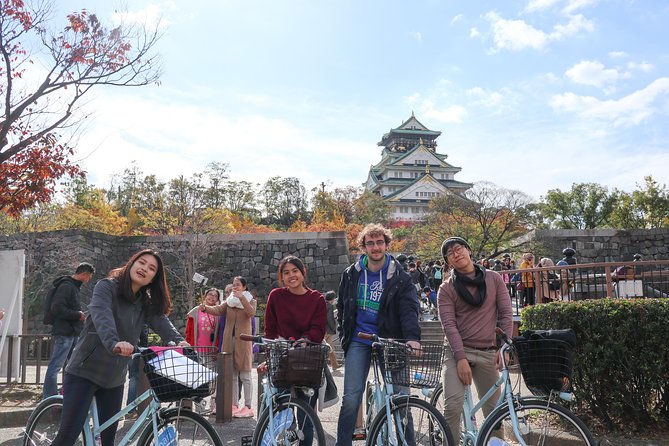
Osaka Castle sits in a large central park, not in a compact historic quarter where every sight is a few steps apart. That matters. On foot, you can reach the main tower and a few nearby features, but the park’s scale makes it harder to appreciate the full setting in one outing.
A bicycle gives you a practical way to connect the castle with its surrounding moats, gardens, shrines, and open paths. You are not simply riding from one photo stop to another. The movement helps you understand how the castle fits into modern Osaka, where old religious sites and major city streets share the same space.
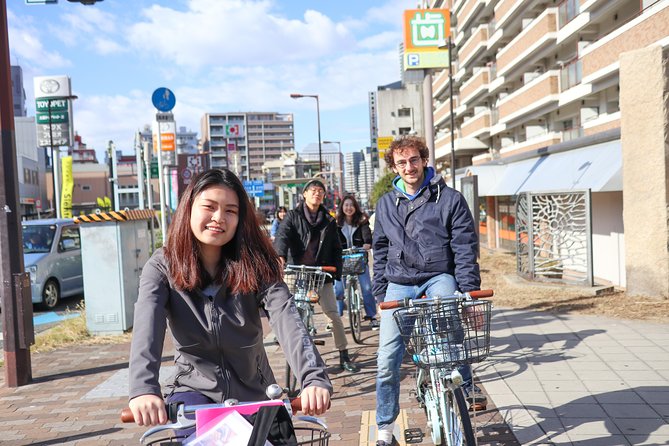
The tour runs for about five hours, which is long enough for a proper introduction rather than a quick ride-by. The pace appears to be designed for sightseeing, not racing. Masumi was praised for keeping the ride comfortable, and a guide who watches the group’s speed can make a large difference for anyone who cycles only now and then.
You should still be comfortable riding a bicycle in an urban setting. One account describes getting a close view of Osaka traffic, so this is not a traffic-free park outing from start to finish. The group is small, but you remain responsible for riding safely and following the guide.
A few more Osaka tours and experiences worth a look

Starting at Osaka Tenmangu Shrine
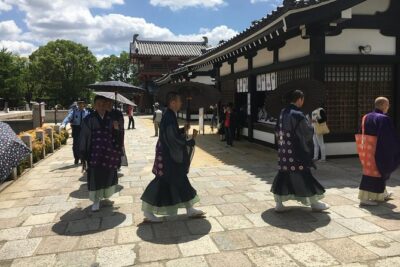
The tour starts at 10 a.m. near FamilyMart at 2-21 Tenmabashikyomachi in Chuo Ward. From there, Osaka Tenmangu Shrine provides a calm first stop and a useful introduction to Japanese Shinto practice.
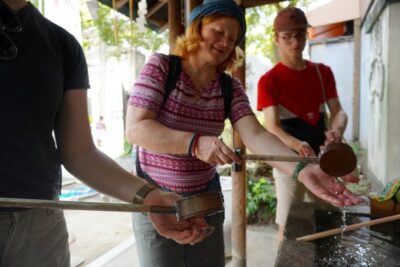
You spend about 20 minutes learning how to worship at the shrine. This is a good choice for the opening stop because it gives you something practical, not just another explanation of dates and names. Your guide can show you the basic behavior expected at a Shinto shrine, helping you feel more at ease at other religious sites in Japan.
Osaka Tenmangu is also known as Tenma Tenjin, Naniwa Sugamo, and Nakajima Tenmangu. The shrine is in the Tenjinbashi area of Kita Ward, placing you in a part of Osaka with strong links to local community life.
The stop is free, and 20 minutes is enough for an introduction without making the morning feel slow. You will not get an extended religious study here, but that is not the purpose. Think of it as a clear, useful lesson before the larger history stops later in the day.
Stepping into Edo Osaka at the housing museum
Next comes the Osaka Museum of Housing and Living, with about 30 minutes inside. This museum recreates streets from Osaka during the Edo period, when the city was a major center of commerce and urban life.
This stop adds something the castle cannot. Osaka Castle tells you about rulers, warfare, power, and rebuilding. The museum shifts attention to ordinary homes, shops, streets, and daily routines. You get a closer sense of how Osaka people lived, rather than only hearing about famous leaders.
The museum admission is included, so you do not need to budget another entrance fee. Thirty minutes is enough for a focused visit, though anyone who enjoys historical interiors may wish for more time. The tour has several stops to fit into one morning and afternoon, so this is an introduction rather than a long museum session.
I find this pairing especially useful. The shrine shows religious customs, the museum covers everyday life, and the castle brings in political history. Together, the three stops give you a more balanced picture of Osaka than a tour built around the castle tower alone.
Reading Osaka Castle beyond the main tower
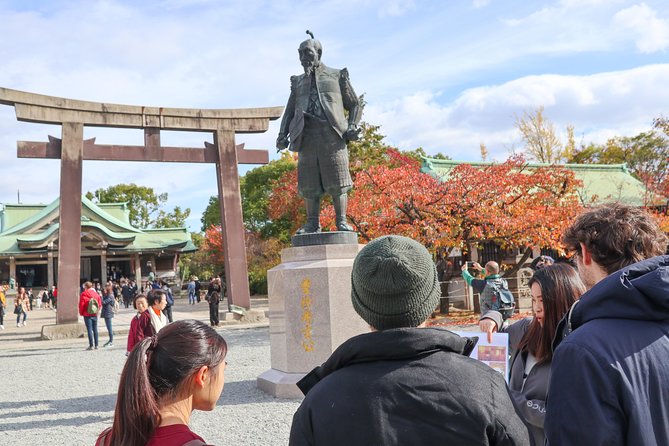
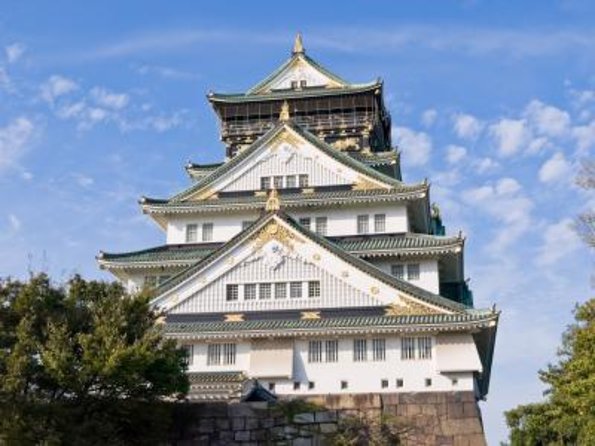
The Osaka Castle portion lasts about an hour and includes cycling and commentary from a local guide. The castle has a complicated past, beginning with the Osaka Honganji Temple at Ishiyama during the Warring States period. Its story is tied to conflict, political change, destruction, rebuilding, and the changing image of Osaka itself.
You should expect the guide to interpret the site rather than simply point at the tower. That is one of the reasons a local-led tour can be useful here. A castle can look impressive while leaving you unsure about what happened, who built it, and how much of what you see is old or reconstructed.
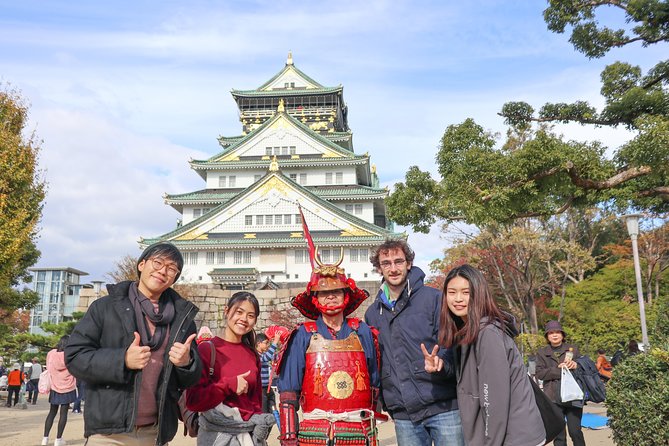
Admission to this portion is listed as free. The ride lets you view the castle from different points around the grounds, rather than entering one building and moving straight back toward the station. Photos are taken during the tour, which is handy if you want a few pictures without constantly stopping to set up your own camera.
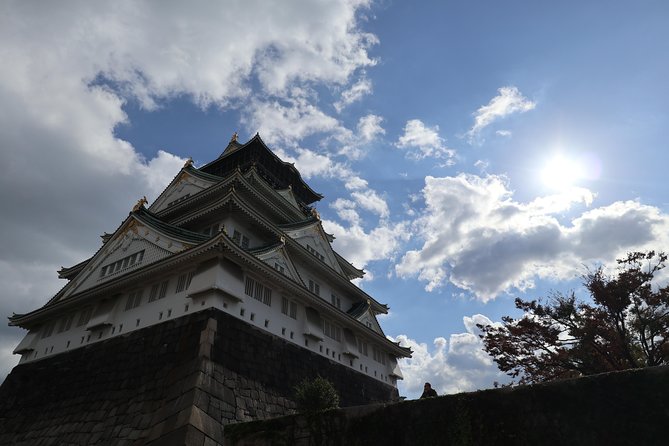
The castle tower is the visual focus, but the surrounding setting is just as important. Stone walls and moats help explain the defensive role of the site, while the park shows how Osaka has adapted a major historical area for present-day city life.
If your main goal is a long interior visit to the castle tower, check the tour details carefully before booking. The scheduled castle segment is about one hour, and the tour’s emphasis is on cycling around the site and learning from the guide. It is better suited to seeing the castle area as a whole than to spending half a day inside the tower.
Cruising through Osaka Castle Park
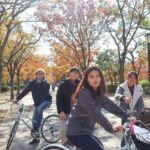
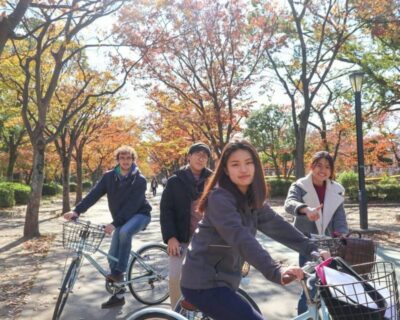
Osaka Castle Park receives another hour, giving you time to ride through the grounds at a more relaxed pace. Because the park is large, this extra time prevents the castle stop from becoming a rushed photo break.
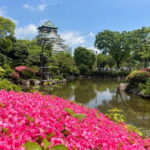
The park sits in central Osaka with the castle tower at its center. You can expect a mix of open space, historic features, paths, and city views. Depending on the season, the setting can change sharply. One account specifically mentions cherry blossoms in the park, so spring can add a strong seasonal bonus, though bloom timing is never guaranteed.
The park section is also where the bike format earns its keep. You can connect areas that would feel scattered on foot, and you get a sense of distance between the moats, castle, and other features. The ride is not only transport between stops. It is part of how you understand the site.
The tour guide’s pacing matters here. Masumi was praised for a comfortable speed, and another guide was described as attentive to the riding pace. That kind of care is important in a mixed group, especially when some people cycle often and others are simply looking for an easy sightseeing ride.
Other cycling tours in Osaka
Lunch, okonomiyaki, mochi, and green tea

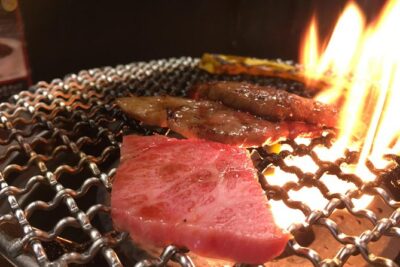
Food helps keep this from becoming a history lesson with a bicycle attached. A lunch set is included, along with green tea and a snack. Vegetarian food is available, though the vegetarian menu still uses fish-based dashi broth.
Specific food mentioned from the experience includes okonomiyaki and mochi. Okonomiyaki is one of Osaka’s signature comfort foods, while mochi gives you a very different texture and flavor. The combination makes sense for a city often linked with casual eating and local specialties.
Do not assume the food can be adjusted for every allergy or dietary need. The food is prepared in kitchens outside MagicalTrip’s control, and substitutions may not always be possible. If you have a serious allergy or strict dietary requirement, contact the operator before booking and be prepared to purchase additional food if needed.
Additional food is not included, but it can be purchased. The included meal and snack should help most people through the five-hour outing, though Osaka’s food culture may tempt you to add something along the way.
Green tea and a snack are a pleasant practical touch. They give you a seated break and help divide the day into manageable sections. Just remember that the tour takes place outdoors for much of its duration, so water remains important, especially from June through September.
What the guides add to the ride
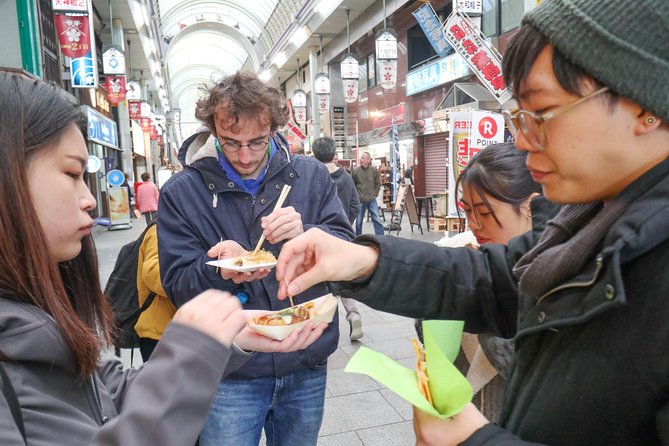
The guide is the part of this experience that can turn a simple bicycle rental into a useful introduction to Osaka. The company uses certified guides, and named guides connected with the tour include Mike, Hide, Masumi, Ken, Yuzu, and Remi K.
A guide from Osaka can explain small points that are easy to miss when you visit independently. One guide was described as being from Osaka and able to answer questions quickly and at length. That local connection is particularly valuable at Osaka Tenmangu and the castle, where a little context can change what you notice.
The group size, capped at six, supports a more personal exchange. You can ask about food, customs, history, or city life without trying to speak over a large crowd. The guide can also watch the group’s pace and help keep the ride together.
Guide quality can vary from one departure to another, as it can on any guided activity. Remi K was leading for the first time on one outing, yet the ride still gave a useful view of the castle area and temples. That is worth keeping in mind if you expect a polished lecture from a senior historian. This is a friendly local experience, not a formal academic tour.
Bike condition, helmets, and summer heat
The bicycles have received mixed practical feedback. One person found the bikes dated but acceptable, noting that they are reconditioned as part of support for people experiencing homelessness. That gives the rental a social purpose, though you should not expect high-end touring bikes.
Because helmets are not included, bring your own if you prefer to ride with one. Insurance is also not included, and the operator recommends arranging your own travel insurance before taking part.
Summer in Japan can be very hot and humid. Take the warning seriously. Bring water, wear a hat, and use sun protection. A five-hour ride with outdoor sightseeing can feel far harder in humid weather than the distance suggests.
The tour requires good weather. If conditions force a cancellation, you are offered another date or a full refund. For your own planning, leave some flexibility around the booking if rain is likely.
Is the $87.55 price fair?
At $87.55 per person, this is not the cheapest way to see Osaka Castle. You are paying for more than bicycle use, though. The price includes the bike rental, a five-hour guided route, admission to the housing museum, lunch, green tea, a snack, and photos.
The small group also matters. A six-person maximum usually gives you more access to the guide than a large coach or walking group. You are buying convenience, local explanation, and a route that links several parts of Osaka in one morning and afternoon.
The value is strongest if you want a broad first look at Osaka and do not want to plan the route yourself. It is weaker if you only want to see the castle tower, avoid cycling in traffic, or prefer to choose every meal and stop independently.
The food inclusion helps soften the price, especially in a city where you may otherwise spend extra time and money arranging lunch. Still, check the menu situation if you have dietary restrictions, and remember that additional food costs extra.
Who should book this Osaka bike tour?
I would choose this for a first or second day in Osaka when you want history, local customs, food, and outdoor sightseeing in one activity. It suits people who like to keep moving and who would rather see several connected places than spend hours at one museum.
It is also a good fit for couples, friends, and families with confident cyclists. The small group works well if you enjoy asking questions and meeting a few other people without joining a large crowd.
I would be more cautious if you dislike urban cycling, need a helmet supplied, have serious food allergies, or are visiting during the hottest part of summer. The tour can still be worthwhile, but those concerns need solving before you pay.
Should you book it?
Book this tour if you want to understand Osaka Castle as part of the city, not just photograph its tower. The combination of Osaka Tenmangu, an Edo-era street museum, the castle grounds, local food, and a small group gives you a well-shaped five-hour introduction.
Skip it if your priority is a long castle interior visit, a high-spec bicycle, or complete control over your food and schedule. For most visitors who are comfortable on a bike, the $87.55 cost is reasonable because it combines transport, guiding, food, and several sights in one outing.
FAQ
How long does the Osaka bike tour last?
The tour lasts approximately five hours.
What time does the tour begin?
It begins at 10 a.m.
Where does the tour start?
The meeting point is FamilyMart at 2-21 Tenmabashikyomachi, Chuo Ward, Osaka, 540-0032, Japan.
Where does the tour end?
The activity ends back at the meeting point.
What is the maximum group size?
The tour has a maximum of six people.
Is bicycle rental included?
Yes. The bike rental fee is included in the tour price.
Is a helmet included?
No. A helmet is not included.
Is lunch included?
Yes. A lunch set is included, and a vegetarian menu is available. The vegetarian menu still uses fish-based dashi broth.
Are green tea and snacks included?
Yes. Green tea and a snack are included.
What happens if the weather is poor?
The tour requires good weather. If it is canceled for that reason, you are offered a different date or a full refund.
More Cycling Tours in Osaka
More Osaka Cycling Tours in Osaka
More tours in Osaka we've reviewed
Osaka Cycling Tours, compared.
 ★ 5.0One-Day Osaka Bike Adventure: 5–6 HoursFrom $106
 ★ 5.0Eat, Drink & Cycle: Osaka Foodie Bike TourFrom $99
 ★ 5.0Osaka E-Bike Tour with a Local GuideFrom $59
 ★ 4.85-Hour Osaka Highlights Bike Tour with LunchFrom $855 hours
 ★ 5.0Osaka in a Nutshell: Three hour bike tourFrom $72
★ 4.7Osaka E-Bike Tour With A Local GuideFrom $573 hours
★ 5.0Osaka in a Nutshell: Three hour bike tourFrom $72
★ 4.7Osaka E-Bike Tour With A Local GuideFrom $573 hours
 ★ 5.0Urban Canvas: Osaka Street Art Bike TourFrom $89
 ★ 5.0Osaka Half-day E-bike Adventure: Minoh Falls & Katsuoji TempleFrom $34
Browse the lists this tour appears in