
Reviewed · OSAKA CYCLING TOURS
Half day Osaka Bay Area Cycling with E-Assist Bicycle Tour
Osaka Bay is at its best when you leave the train map behind. This 26 to 30-kilometer e-bike ride links an ancient shrine, working-class neighborhoods, ferry crossings, factory roads, huge bridges, and Tempozan’s aquarium district in one half-day outing. Guide Banri leads a group of no more than three, so you get plenty of help along the way.
I like the local ferry crossings, each lasting about a minute and carrying bicycles and pedestrians, and I like the way this tour shows Osaka as a working port rather than only a sightseeing center. The views from Namihaya Bridge and Sembonmatsu Bridge are memorable, too.
The main caution is the route itself. Some roads carry large trucks, and several bridge approaches are steep. You need to ride a bicycle confidently, have moderate fitness, and be comfortable with a little road noise and industrial air.
In This Review
- Key points to know before you book
- Starting at Sumiyoshi Taisha
- Bridges, views, and the factory district
- A one-minute ferry at Funamachi
- IKEA Tsuruhama and the lunch question
- Namihaya Bridge and the wide Osaka view
- Tempozan: aquarium, Ferris wheel, and lunch
- Under the expressways and through an old arcade
- The second ferry and Sensai Bridge
- Sembonmatsu Bridge and the final river crossing
- What the small group changes
- Price, equipment, and practical value
- Who should take this ride
- Should you book the Osaka Bay e-bike tour?
- FAQ
- How long does the Osaka Bay cycling tour last?
- Where does the tour start and finish?
- Is an electric bicycle included?
- How far do you cycle?
- Is lunch included?
- How many people can join the tour?
- Do I need to be physically fit?
- What happens if it rains?
Key points to know before you book
- A true local Osaka route: Ride through factory districts, neighborhood shopping arcades, and port communities that most visitors pass by.
- Two one-minute ferries: Board Osaka City ferries with your bicycle instead of tackling every river crossing by road.
- A tiny group: The maximum is three people, making it easier to stay with Banri and ask questions.
- More than a gentle spin: Expect roughly 26 to 30 kilometers, steep bridge access in places, and roads used by large trucks.
- A useful e-bike advantage: Electric assistance helps with Osaka’s bridges, though you still need to pedal and control the bicycle.
- Plan for lunch: Food is not included. You’ll stop at a Japanese diner in Tempozan, or vegetarians can eat at IKEA Tsuruhama.
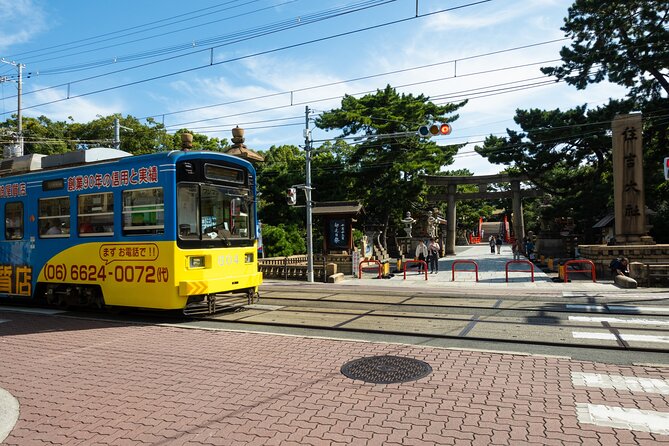
Osaka is famous for Dotonbori lights, castle walls, and crowded shopping streets. This ride takes you somewhere else. You pedal through the city’s southern and western edges, where bridges rise over shipping channels, factories sit beside residential blocks, and short public ferries still serve local commuters on foot and by bicycle.
That change of pace is the tour’s real value. You are not simply checking off famous attractions. You are seeing how Osaka functions, with help from a local guide who can explain the area’s past and point out details you could easily miss from a train window.
Starting at Sumiyoshi Taisha
The meeting point is Lawson Tamadenaka 2-chome in Nishinari Ward. The start time is 10:00 a.m., and the activity returns to this same location. Bike, helmet, and bottled water are included, which keeps the morning simple.
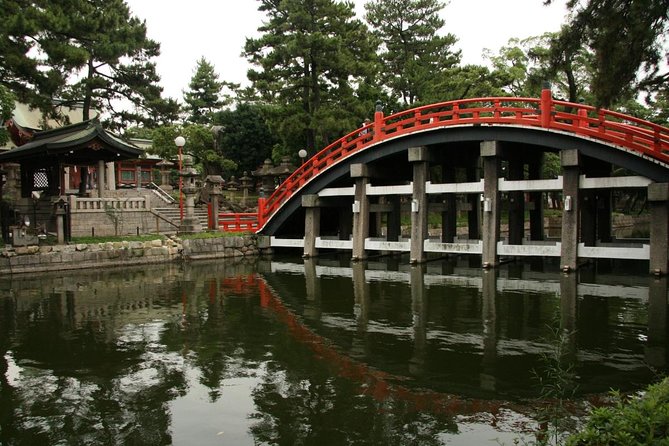
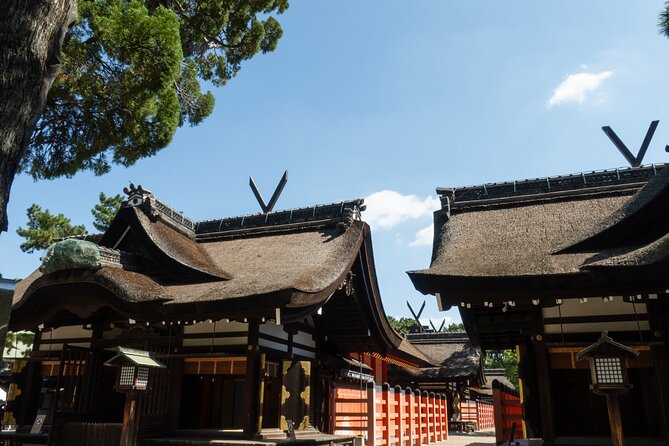
The first major stop is Sumiyoshi Taisha, one of Japan’s oldest shrines, with a history reaching back nearly 2,000 years. It is dedicated to three gods of the sea, a fitting beginning for a ride through Osaka’s bay districts. The shrine buildings include a designated Japanese national treasure, so this is not just a quick photo stop.
You get about 30 minutes here. That is enough time to take in the grounds and hear some background from Banri without turning the morning into a long formal shrine visit. The free admission also means your tour price is paying for the guiding, bicycle, equipment, and route rather than entrance tickets.
A few more Osaka tours and experiences worth a look

Bridges, views, and the factory district
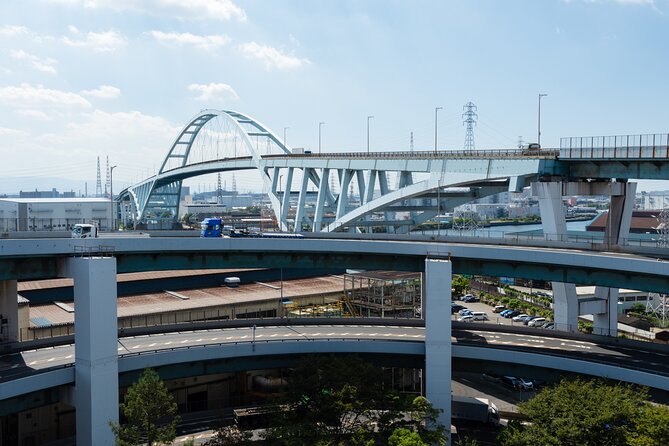
From Sumiyoshi Taisha, the route heads toward Shinkizugawa Bridge. You spend about 20 minutes here, with views toward Tennoji and the Ikoma Mountains in the distance. The three-stage loop bridge gives the ride a little drama, especially on the descent.
Bridge access is one of the places where the e-assist bicycle earns its keep. The route is not a flat cruise along a waterfront path. You climb and descend structures built for Osaka’s waterways and roads. One review described some bridge approaches as steep and tricky, so you should take your time and follow Banri’s instructions rather than treating the ride like a race.
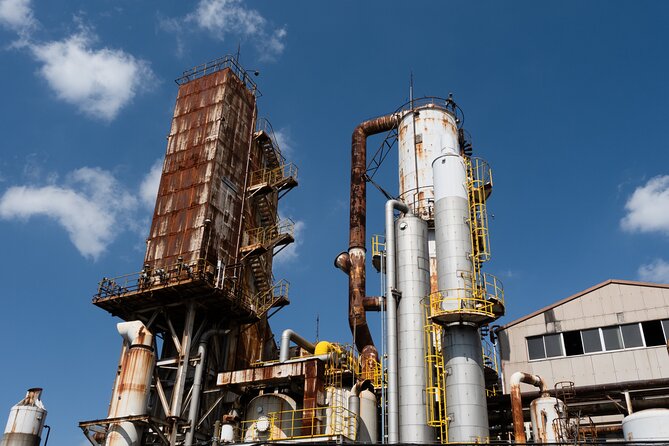
The route also passes through a factory district used in Ridley Scott’s film Black Rain, which was filmed in Osaka and New York City. Even if you have not seen the film, the area offers a useful look at Osaka’s industrial side. This is the sort of setting that rarely appears in a standard city tour, and it helps explain the city’s role as a major port and manufacturing center.
The drawback is traffic. Large trucks use these roads, and the air may be less pleasant than it is around a shrine or park. If you are concerned about dust or exhaust, the operator advises bringing a mask and eye drops. Wear comfortable clothes that let you pedal and turn freely.
A one-minute ferry at Funamachi
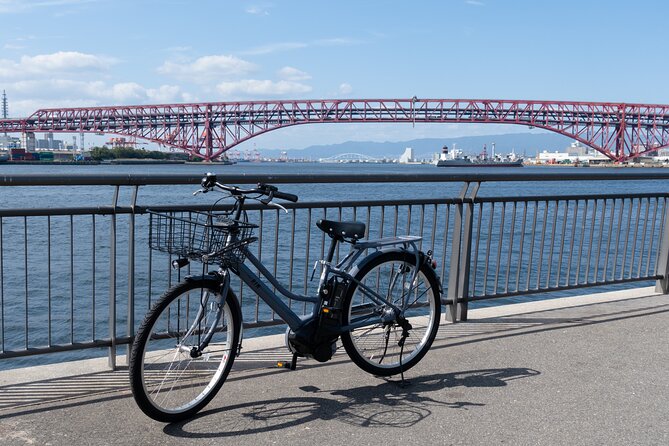
At the Funamachi Ferry Facilities, you board a very short Osaka City ferry. The crossing takes about one minute and is limited to bicycles and pedestrians. There is no admission charge.
The crossing is brief, but it is one of the most distinctive parts of the ride. Instead of seeing Osaka’s rivers only from a bridge, you use the same practical transport that serves local residents. You roll your bicycle aboard, cross the water, and continue on the other side.
This also breaks up the cycling in a useful way. A 26 to 30-kilometer route can feel long if every section is continuous pedaling. The ferries add variety and give you a moment to look around before the next road section.
IKEA Tsuruhama and the lunch question
IKEA Tsuruhama is a rest stop rather than a major sightseeing attraction. You get around 15 minutes here. Vegetarians can have lunch at the IKEA Swedish food market, while the general lunch plan is a Japanese diner later at Tempozan.
Lunch is not included, so bring money for food. The split arrangement is practical, but you should know the day is not built around a long restaurant meal. If you need a full breakfast, coffee break, or special meal schedule, take care of that before the tour starts.
The stop also shows how this experience mixes ordinary Osaka with recognizable landmarks. You may not choose IKEA as a headline attraction, but stopping there reflects the ride’s everyday character. This is a route through places people use, not a string of polished photo backdrops.
Namihaya Bridge and the wide Osaka view
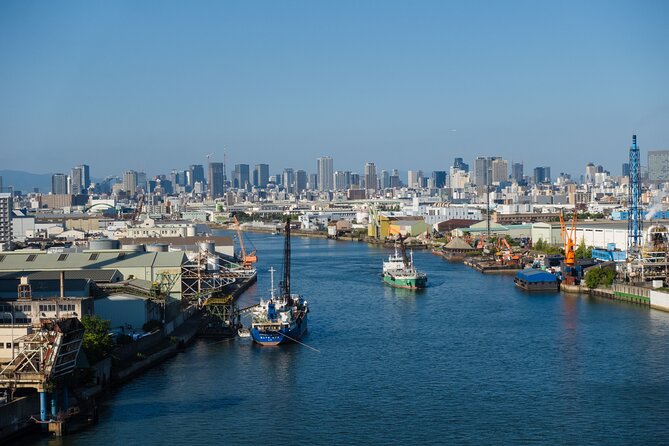
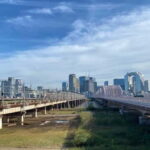
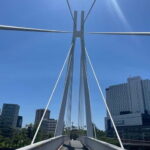
Namihaya Bridge sits near the middle of the bay area and offers a 360-degree view across Osaka. The bridge rises about 47 meters above the water surface so ships can pass underneath.
You spend about 20 minutes here. This is one of the best places to understand the scale of the bay. Roads, channels, port structures, and the city center come together from a high viewpoint. The bridge is also a good photo stop, though you should stay focused on the cycling conditions when approaching and leaving it.
The e-bike matters again here. The point is not simply that it makes the ride easier. It lets you cover a much larger area in a limited time, including elevated crossings that would be tiring on a standard bicycle. You still need to pedal, steer, and manage the bike, but the electric assistance takes some strain out of the climbs.
Other cycling tours in Osaka
Tempozan: aquarium, Ferris wheel, and lunch
Tempozan gives you the longest break of the day, about 40 minutes. The area is known for the Kaiyukan Aquarium, a Ferris wheel, cherry blossoms in spring, and architecture associated with Tadao Ando. The tour passes the aquarium and Ferris wheel, then stops for lunch at a Japanese diner.
This is not a separate aquarium visit. The admission cost is not included, and the timing is not designed for exploring the interior. Think of Tempozan as a pause in the cycling route, with time for food and a look at one of Osaka’s best-known bay districts.
The surrounding infrastructure is part of the appeal. The ride takes you through places where expressways, subway tracks, piers, and waterways intersect. The complicated structure can be surprisingly photogenic, especially if you enjoy bridges and transport design more than conventional sightseeing.
The break is also important for pacing. A half-day tour that covers this much ground needs a proper pause. Forty minutes is enough to eat, but it is not a leisurely restaurant outing. Keep your order and meal simple if you want to stay on schedule.
Under the expressways and through an old arcade

After Tempozan, the route continues through a section where three expressways intersect and subway tracks cross nearby. The piers and road structures create an intricate industrial scene. This is a good example of what makes the tour different from a standard Osaka highlights route: the city’s transport system becomes part of the view.
You also pass an old-style Japanese arcade shopping center. In Japan, an arcade is a covered shopping street, not a video game hall. These local commercial areas give you a look at daily life beyond the department stores and tourist shopping zones.
The stops are short, and the tour does not promise long shopping time. Still, they add context. You see the neighborhoods that support the port, factories, rail lines, and major attractions rather than moving only between famous landmarks.
The second ferry and Sensai Bridge
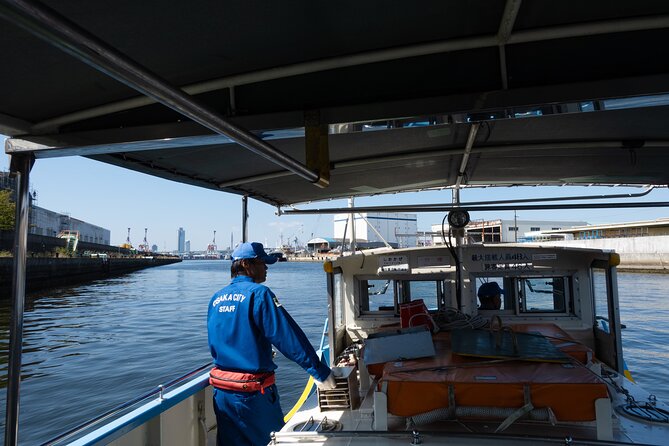
At the Jinbei Ferry Terminal on the Taisho Ward Izio side, you take another Osaka City ferry. Like the first, it carries bicycles and pedestrians and takes about one minute.
The second crossing reinforces the practical rhythm of the route. You are not just sightseeing beside the water. You are using small pieces of Osaka’s transport network to move through it. For a visitor, this can be more memorable than another standard bridge crossing.
The next stop is Sensai Bridge. The bicycle road here is very steep, and the route may use the ferry to cross the river instead. This is an important detail for anyone booking because it shows the ride is not always about conquering every incline on two wheels.
If you are uneasy on steep access roads, tell Banri early and follow the ferry option when offered. The point is to keep the route moving safely, not to prove anything. The e-assist helps, but it does not remove the need for balance and control.
Sembonmatsu Bridge and the final river crossing
The final featured bridge is Sembonmatsu Bridge, which crosses the Kizu River, the waterway connected to Dotonbori. Locals call it Megane-bashi, or glasses bridge, because its shape resembles a pair of spectacles.
You spend about 15 minutes here. The bridge’s unusual form gives the route a strong final photo stop, and it brings the ride back toward the central waterways of Osaka. By this point, you have seen the city from shrine grounds, high bridges, ferries, industrial roads, and port-side streets.
The sequence also makes sense geographically. Rather than spending the whole tour in one compact sightseeing district, you follow the water and road network around the bay. That is why the total distance is substantial, even though the experience lasts only four to six hours.
What the small group changes
The maximum group size is three people. That is a major advantage on a route with steep bridge access, truck traffic, ferry boarding, and several points where the guide needs to keep everyone together.
A tiny group also gives Banri more room to adjust the pace and explain the area. The available feedback highlights his patient approach and his use of maps to explain how Osaka developed over time. That kind of local context is useful here because the sights are not always self-explanatory.
You should still expect an active outing, not a private car tour with occasional photo stops. The ride covers roughly 26 to 30 kilometers, depending on the exact route and conditions. Moderate physical fitness is required, and you must already know how to ride a bicycle.
Price, equipment, and practical value
At $78.38 per person, the tour is reasonably priced for a small-group guided ride that includes the bicycle, electric assistance, helmet, and bottled water. You are also paying for the route planning and for help with crossings and navigation across a large, complicated part of Osaka.
The value is strongest if you want access to places that are awkward to link on your own. You could piece together shrines, bay districts, bridges, ferries, and Tempozan by public transport, but the connections would take planning. On this tour, Banri handles the route while you focus on the views.
The value is weaker if your priority is a relaxed ride of only a few kilometers, a long lunch, or extended time inside the aquarium. The price does not include lunch or attraction admission, and the experience is built around movement.
The tour is booked, on average, nine days ahead. That is useful planning information for a small group capped at three people. If your Osaka dates are fixed, reserve early rather than assuming a last-minute place will be available.
Who should take this ride
I would choose this tour if you have already seen Osaka’s main central sights and want a different view of the city. It is especially well suited to people who enjoy bridges, public transport, port districts, local neighborhoods, and the small details of how a city works.
It also suits active visitors who want a half-day outing instead of a full-day excursion. The e-assist makes the distance more manageable, but you should not book it if you cannot comfortably ride a bicycle or if steep bridge approaches worry you.
Tall riders should take note: the bicycle may feel too small if you are over 180 centimeters. The minimum height is 140 centimeters, and the maximum weight is 90 kilograms. These limits are practical equipment requirements, not minor footnotes.
Rain can also change the plan. The tour is canceled when the rain probability reaches 40 percent or more, with a different date or full refund offered in that case. For the same reason, keep the day flexible if the forecast looks uncertain. You can cancel for a full refund up to 24 hours before the start time, but changes or cancellations inside that window are not accepted.
Should you book the Osaka Bay e-bike tour?
Book it if you want real Osaka beyond the postcard center, have moderate fitness, and like the idea of covering a lot of ground by bicycle. Banri’s small-group format, local ferries, bridge views, and industrial neighborhoods make this a strong choice for curious repeat visitors and active first-time visitors alike.
Skip it if you want a slow, flat cycle, dislike traffic, need a long meal break, or plan to spend the day inside the Kaiyukan Aquarium. The best reason to choose this tour is not one famous stop. It is the unusual combination of shrine, factory district, ferry, bridge, shopping arcade, and port city life, all connected by an e-bike.
FAQ
How long does the Osaka Bay cycling tour last?
The tour lasts approximately four to six hours and starts at 10:00 a.m. It ends back at the meeting point.
Where does the tour start and finish?
It starts at Lawson Tamadenaka 2-chome, 2-chome-6-12 Tamadenaka, Nishinari Ward, Osaka, 557-0044, Japan. The activity returns to the same meeting point.
Is an electric bicycle included?
Yes. Bicycle use, a helmet, and bottled water are included in the tour price.
How far do you cycle?
The route covers roughly 26 to 30 kilometers, according to the tour details and available descriptions of the ride.
Is lunch included?
No. Lunch is not included. The route stops at a Japanese diner in Tempozan, and vegetarians can have lunch at the IKEA Tsuruhama Swedish food market.
How many people can join the tour?
The tour has a maximum of three participants, allowing for a small-group experience.
Do I need to be physically fit?
You need moderate physical fitness and must be able to ride a bicycle. The route includes steep bridge access and roads with heavy truck traffic.
What happens if it rains?
The tour is canceled when the rain probability is 40 percent or higher. You will be offered another date or a full refund. For personal cancellations, you must cancel at least 24 hours before the start time for a full refund.
More Cycling Tours in Osaka
More Osaka Cycling Tours in Osaka
More tours in Osaka we've reviewed
Osaka Cycling Tours, compared.
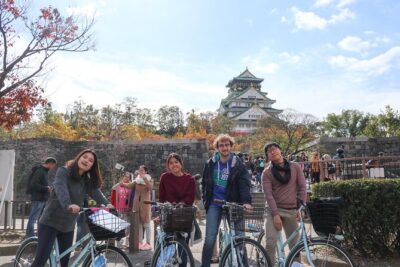 ★ 5.05-Hour Osaka Bike Tour to the Neighborhood of Osaka CastleFrom $87
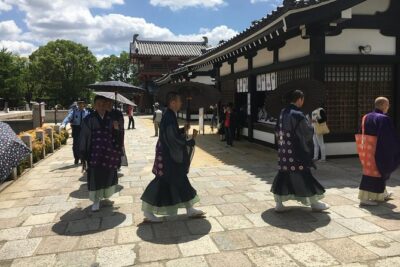 ★ 5.0One-Day Osaka Bike Adventure: 5–6 HoursFrom $106
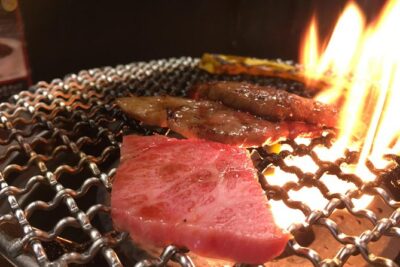 ★ 5.0Eat, Drink & Cycle: Osaka Foodie Bike TourFrom $99
 ★ 5.0Osaka E-Bike Tour with a Local GuideFrom $59
 ★ 4.85-Hour Osaka Highlights Bike Tour with LunchFrom $855 hours
 ★ 5.0Osaka in a Nutshell: Three hour bike tourFrom $72
★ 4.7Osaka E-Bike Tour With A Local GuideFrom $573 hours
★ 5.0Osaka in a Nutshell: Three hour bike tourFrom $72
★ 4.7Osaka E-Bike Tour With A Local GuideFrom $573 hours
 ★ 5.0Urban Canvas: Osaka Street Art Bike TourFrom $89
Browse the lists this tour appears in