
Reviewed · OSAKA CYCLING TOURS
Eat, Drink & Cycle: Osaka Foodie Bike Tour
Osaka’s food culture is best understood one bite at a time, and this bike-and-food tour covers a lot of ground between those bites. You ride from Shinsekai toward Shitennoji and Tsuruhashi, stopping for dishes such as oden, doteyaki, tofu, market snacks, wagyu, sushi, and kushikatsu. It is a quick way to connect several parts of South Osaka without spending the whole morning on foot.
I like the mix of local food and neighborhood sightseeing, especially the time spent in Tsuruhashi market rather than only at famous restaurant chains. I also like the small group, capped at seven, and the guides’ personal recommendations. The main caution is value: at $99.49, this is not a cheap way to eat in Osaka, and the number of food stops can vary.
In This Review
- Key points at a glance
- Why this tour works for food-loving cyclists
- Meeting beneath Tsutenkaku and setting up the bikes
- Shinsekai: starting with Osaka comfort food
- Shitennoji brings a quiet pause between bites
- Tsuruhashi market is the tour’s best local-food stretch
- Wagyu gives the middle of the ride a proper meal
- Tower Knives adds a hands-on Osaka moment
- Sushi and kushikatsu close the food route
- What the $99.49 price really covers
- Cycling conditions, weather, and comfort
- Who will enjoy this Osaka food ride
- Practical booking advice before you go
- Should you book the Osaka Foodie Bike Tour?
- FAQ
- How long does the Osaka Foodie Bike Tour last?
- What food is included?
- Are bicycles and helmets provided?
- How many people can join the tour?
- Where does the tour start and end?
- Is the tour suitable for children?
- What happens if it rains?
Key points at a glance
- Three to four food stops: Sample Osaka favorites at small eateries and market stalls, with lunch and snacks included.
- A practical route through South Osaka: Cycle from Shinsekai to Shitennoji and Tsuruhashi, seeing more than a walking tour allows.
- Small groups of up to seven: The format gives you a better chance to ask questions and request restaurant tips.
- Easy riding for many people: Osaka is mostly flat, though you should be comfortable cycling in city streets.
- Guides add personality: Mako, Matt, Peter, Erik, Maiko, Mayco, and others have led tours praised for food knowledge, local stories, and good pacing.
- A useful first-day activity: You leave with a list of places to eat for the rest of your Osaka stay.
Why this tour works for food-loving cyclists
I see this as two tours joined together. The first is a guided bike ride through southern Osaka. The second is a food crawl built around small tastings rather than one large restaurant meal.
That combination matters in Osaka. A walking food tour can keep you in one district, while a standard sightseeing ride may pass food shops without giving you a reason to stop. Here, the bicycle connects the dots. You can visit Shinsekai, Shitennoji, Tsuruhashi, and other local areas in about three and a half hours.
The format also helps you get your bearings. Osaka can feel spread out, and the city’s best food is not limited to one famous street. A guide can point out useful areas and explain what makes one dish different from another. Guides such as Mako, Matt, Peter, Erik, and Mayco have been singled out for clear English, humor, local insight, and restaurant advice.
The tour has a 4.9 rating from 224 reviews, with 98 percent recommending it. That points to a very consistent experience, though the one notable criticism is fair: if you judge the $99.49 price only by the amount of food served, you may find it expensive.
A few more Osaka tours and experiences worth a look
Meeting beneath Tsutenkaku and setting up the bikes
The detailed route begins under Tsutenkaku tower at 9:30 a.m., followed by a short trip to the bicycle storage facility for fitting and helmets. The booking details also list a meeting point in Tenma and a 10:30 a.m. start, so you should confirm the exact location and time before setting out.
That discrepancy is worth taking seriously. Osaka has several central districts, and you do not want to begin the morning at the wrong station or tower. The tour ends back at the starting point, and transport to the meeting point is not included.
Bike fitting is a useful part of the start, not just a formality. Different bike sizes are available, and helmets are supplied. Several riders found the bikes solid and easy to use. Some older cyclists requested e-bikes because they were unsure about the terrain and found the ride comfortable, but e-bikes are not listed as a standard inclusion, so ask about availability before booking.
The ride requires a moderate level of fitness. You do not need to be a serious cyclist, but you should be comfortable riding for several hours with stops, moving through city streets, and getting back on the bike repeatedly. Riders under 140 centimeters cannot join, and the tour is not recommended for children aged 12 and under.
Shinsekai: starting with Osaka comfort food
The first food stop is in Shinsekai, one of Osaka’s most recognizable old entertainment districts. Depending on the group’s tastes, the opening bite may be oden, tofu, or doteyaki.
These are useful foods to try early in your Osaka visit because they introduce flavors beyond the dishes most visitors already know. Oden is a gentle, simmered dish served with items such as tofu and other ingredients. Doteyaki is a savory beef tendon preparation associated with Osaka. Tofu offers a lighter start.
The precise first dish is not fixed, which is both a strength and a small uncertainty. You get some flexibility based on the group, but anyone hoping for a set menu should not expect every departure to taste exactly the same.
Shinsekai also gives the ride a strong opening setting. You are not simply eating in a generic restaurant. You begin in a district long associated with local food, casual entertainment, and Tsutenkaku tower. The guide’s explanation helps connect the food to the neighborhood instead of treating each sample as an isolated snack.
Shitennoji brings a quiet pause between bites
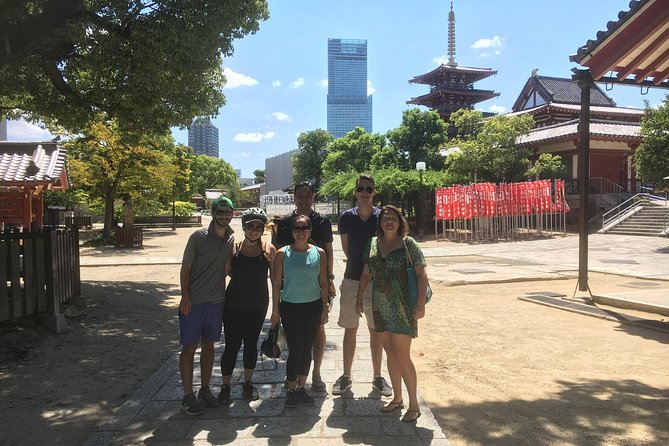
After Shinsekai, you ride toward Shitennoji, described as Japan’s oldest temple. The route includes a stop for photographs and a short explanation of the area.
This break improves the rhythm of the tour. Three and a half hours of eating can feel heavy, while three and a half hours of cycling can feel like an exercise class. Shitennoji gives you a cultural stop and a chance to pause before the next food district.
Do not expect an extended temple visit. The schedule allows for photographs and a brief talk rather than a long exploration of every building. If Shitennoji is high on your Osaka list, plan to return on your own. If you mainly want a taste of the area and a little context, the stop works well.
The ride down toward the next district is also part of the appeal. You see how quickly Osaka’s streets change as you move between neighborhoods, and the bicycle makes those transitions feel more connected than a series of train rides.
Tsuruhashi market is the tour’s best local-food stretch
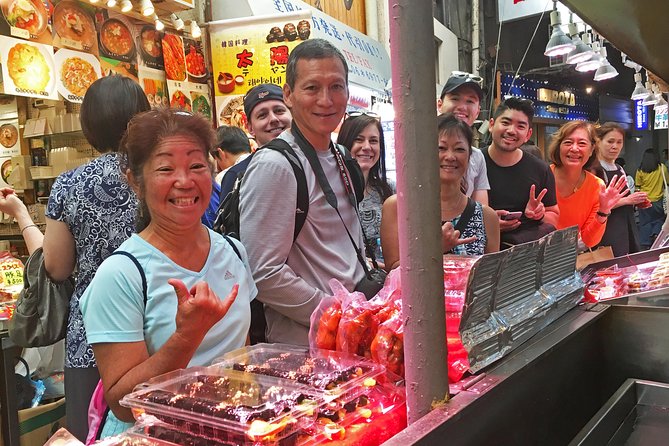
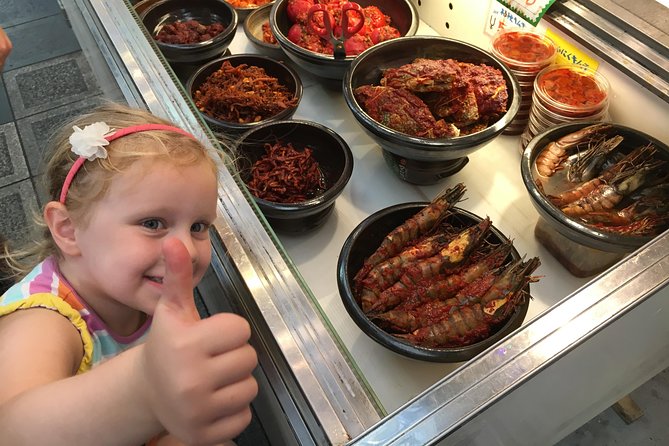
The group spends about 40 to 60 minutes in Tsuruhashi market, meeting stall holders and trying a range of snacks. This is the part I would value most if you want food away from Osaka’s most polished tourist corridors.
Tsuruhashi is closely linked with Osaka’s Korean community, and the food selection can include Korean dishes, Japanese snacks, sweets, pastries, and other market specialties. One food-filled departure included items such as Japanese sweets, Korean dishes, pancakes, noodles, rice dishes, and local snacks. Another included homemade sticky rice candy balls.
The exact lineup changes, so you should think of the market as a tasting session rather than a guaranteed menu. That flexibility is useful for a group with mixed tastes, but it also means one person’s tour may feel more substantial than another’s.
The time allowance is long enough to look around rather than simply grab one item and leave. You can meet local stall holders and see how the market functions. Still, do not expect unlimited free time at every stall. The guide controls the pace so the group can fit in the later stops.
This section also shows why the guide matters. Without help, you may recognize very little of what is on display. With a guide, unfamiliar dishes become easier to try, and you can ask what to look for later in your trip.
Wagyu gives the middle of the ride a proper meal
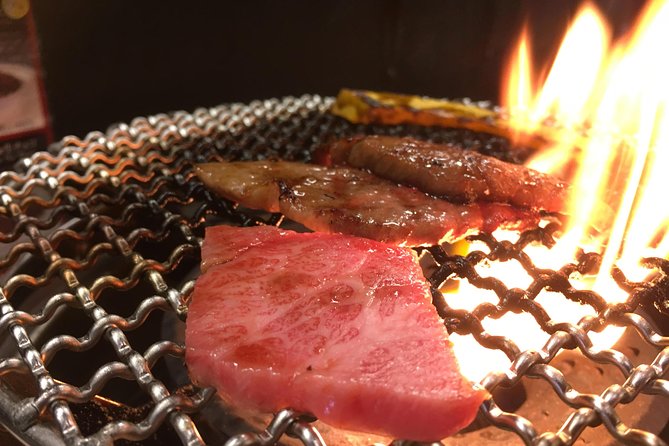
After the market, the group sits down for a wagyu beef tasting. This changes the pace from standing snacks to a more focused food stop.
Wagyu is one of the tour’s higher-value inclusions. Osaka has no shortage of beef restaurants, but having a guide choose a tasting stop saves you the work of sorting through menus and tourist-focused venues. The food is also spaced through the ride, so you are not trying to eat every dish in one sitting.
That said, the tour does not promise a full wagyu meal. It is described as a taster, and lunch and snacks are spread across three or four eateries. If you want a large yakiniku dinner or an extended premium beef meal, save room and budget for another restaurant.
One especially food-focused route included a carefully chosen yakiniku stop and an onigiri shop. Since the itinerary can vary, those particular stops should not be treated as guaranteed. They do show the kind of local food knowledge the guide may bring to the day.
Tower Knives adds a hands-on Osaka moment
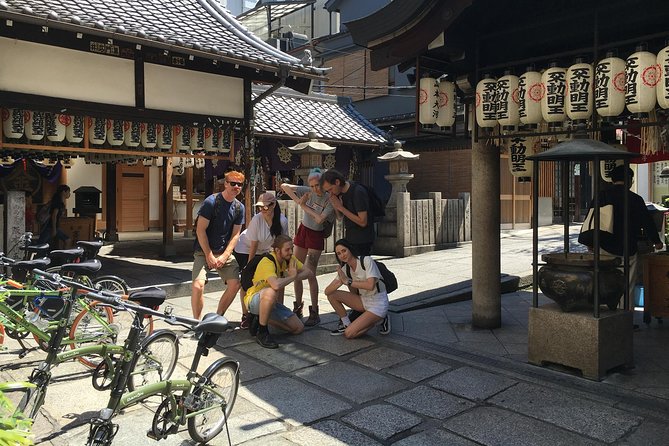
The route includes a stop at Tower Knives, where you get to try your hand with Osaka’s knife-making tradition. This is a welcome change from simply looking at sights or eating.
The stop gives the tour a small practical activity. Osaka is known for its connection to kitchen tools and food preparation, so the knife visit fits the theme rather than feeling like a random shop stop. It also gives you something to remember besides a list of dishes.
The description does not specify exactly how long the stop lasts or whether you are expected to purchase anything. I would treat it as a short demonstration or hands-on taste of the craft, not as a full workshop. If you are interested in buying a knife, ask the guide about shipping, luggage rules, and shop procedures before making a purchase.
Sushi and kushikatsu close the food route
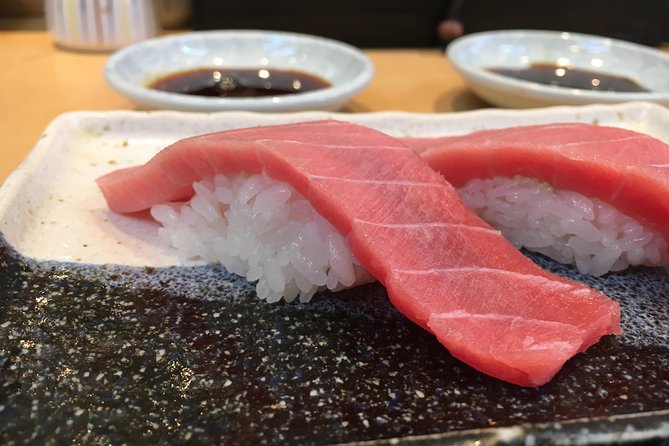
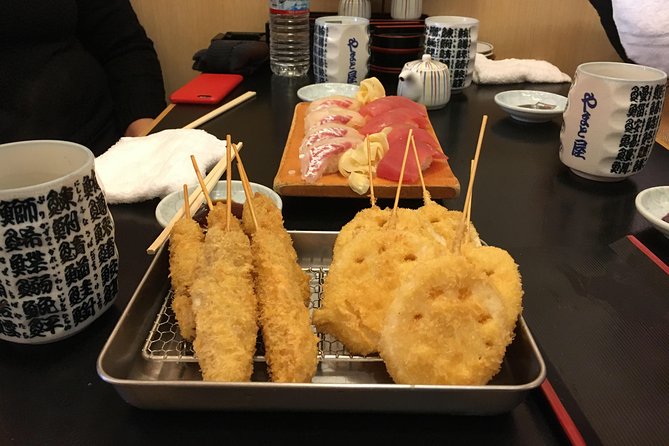
The final food stop is a locally run sushi shop. The guide recommends a set of nigiri, and assorted kushikatsu skewers arrive from next door.
This is a smart ending because it puts two Osaka favorites side by side. Sushi offers clean, simple flavors, while kushikatsu brings the fried, stick-served style strongly linked with Osaka. You get a chance to compare different parts of the city’s food culture in one sitting.
The food is delivered from the neighboring shop, so this is not necessarily a single restaurant with a large menu. That arrangement is part of the informal local feel, but it also means the stop may be less polished than a formal sushi booking.
By this point, you may be full. Several departures serve enough food to leave riders stuffed, and one family described the amount as surprisingly generous. A single departure felt lighter, with only two main locations according to one disappointed customer. If portion size is your main reason for booking, the variable menu is the biggest thing to keep in mind.
After the final stop, it is only about two minutes back to the base. You return the bicycles and are free for the afternoon, which makes the tour easy to combine with another Osaka plan.
What the $99.49 price really covers
At $99.49 per person, the price sits well above the cost of buying casual Osaka snacks on your own. You can eat cheaply in this city, especially at markets, noodle shops, and small counter restaurants.
The value comes from the service around the food. You are paying for a bicycle, helmet, guide, route planning, translation, introductions to several eateries, bottled water, and the ability to cover multiple districts in one morning. You also avoid the uncertainty of ordering unfamiliar food without help.
I think the price makes more sense for a first visit, a short stay, or anyone who wants a ready-made introduction to Osaka food. It is less convincing for an experienced Japan visitor who already knows the city’s eating districts and is happy to explore independently.
The small-group limit helps justify the cost. With no more than seven people, the guide can answer questions, adjust the pace, and explain dishes without shouting to a large crowd. It also makes it easier to request ideas for restaurants later in your stay.
Alcohol is not included, and transportation to the meeting point is not included. Keep those costs separate when comparing this with other food tours.
Cycling conditions, weather, and comfort
The route is described as easy for many riders because Osaka is mostly flat. That does not mean the tour is effortless. You still spend several hours on a bicycle, and city riding requires attention around traffic, pedestrians, and intersections.
The reviews include older cyclists who found the ride relaxed, as well as a minor accident handled with helmets and a first-aid kit. That is reassuring, but it is also a reminder to ride carefully and follow the guide’s instructions.
Weather matters. The tour requires good weather and can be canceled in poor conditions, with a different date or full refund offered. Rain is not always a deal breaker if the tour runs, but bring a poncho or other rain protection. One wet-day ride still included food, history, and sightseeing, but cycling in Osaka rain will never be as pleasant as riding on a dry morning.
Hot weather requires similar planning. One guide adjusted the route to use more shade, which made the ride more comfortable. Wear light clothing, bring sun protection, and drink the supplied water.
Who will enjoy this Osaka food ride
I would choose this tour if you want to:
- Cover several southern Osaka districts in one morning
- Try unfamiliar foods with an English-speaking guide
- Mix sightseeing with eating instead of spending the whole day in restaurants
- Get restaurant suggestions for later
- Ride at a relaxed pace rather than train between every stop
- Join a small group instead of a large bus tour
It suits couples, friends, solo visitors who like meeting a few people, and active families with children old enough and tall enough to ride. One family with two children aged 12 had a full and enjoyable day, but the stated policy does not recommend the activity for children 12 and under, so confirm before booking.
I would hesitate if you dislike bicycles, have limited mobility, need a fixed food menu, or want a long visit at each temple and market. I would also think twice if $100 feels high for several tastings. Osaka is full of affordable food, and independent eating can cost much less.
Practical booking advice before you go
The tour has free cancellation up to 24 hours before the start time for a full refund. Changes or cancellations inside that window are not accepted for a refund, and poor weather or failure to meet the minimum group size can lead to a rescheduled activity or full refund.
Confirmation is provided at booking, and the meeting point is near public transportation. Because the supplied details show both Tsutenkaku at 9:30 a.m. and Tenma at 10:30 a.m., check your confirmation carefully and contact the provider if the location is unclear.
Tell the provider about food preferences when possible. The first stop can change based on the group’s tastes, and the food may include meat, seafood, tofu, Japanese sweets, Korean dishes, and fried snacks. Bottled water is supplied, but alcohol is not.
Should you book the Osaka Foodie Bike Tour?
I would book it early in an Osaka visit, especially if you want a fast introduction to local food and neighborhoods. The strongest part is the combination of a small group, a useful route, and guides who add personal stories and practical eating advice.
The price is justified when you value convenience, interpretation, and access to places you might not choose on your own. It is harder to justify if you only want the food itself or expect a large, fixed tasting menu.
Book this tour if you like casual cycling, are open to unfamiliar dishes, and want to turn one morning into a working map of Osaka’s food culture. Skip it if you prefer to wander slowly, choose every restaurant yourself, or need complete certainty about the menu. For the right visitor, it is an efficient and tasty start to an Osaka stay.
FAQ
How long does the Osaka Foodie Bike Tour last?
The activity lasts approximately 3 hours and 30 minutes.
What food is included?
The tour includes lunch and snacks at three to four eateries. Possible tastings include oden, tofu, doteyaki, market snacks, wagyu beef, sushi, nigiri, and kushikatsu, though the exact food can vary.
Are bicycles and helmets provided?
Yes. The bicycle and safety helmet are included, and the bikes are fitted before the ride. Different bike sizes are available. E-bikes may be available by request, but they are not listed as a standard inclusion.
How many people can join the tour?
The tour has a maximum of seven travelers.
Where does the tour start and end?
The activity ends back at the meeting point. The detailed route describes meeting under Tsutenkaku tower, while the additional details list 1-chōme-10-7 Tenma in Kita Ward and a 10:30 a.m. start. Confirm the exact meeting information after booking.
Is the tour suitable for children?
The tour is not recommended for children aged 12 and under, and riders under 140 centimeters cannot participate.
What happens if it rains?
The activity requires good weather. If the provider cancels because of poor weather, you can choose a different date or receive a full refund. If the tour runs in rain, bring a poncho.
More Osaka Cycling Tours in Osaka
More tours in Osaka we've reviewed
Osaka Cycling Tours, compared.
 ★ 5.05-Hour Osaka Bike Tour to the Neighborhood of Osaka CastleFrom $87
 ★ 5.0One-Day Osaka Bike Adventure: 5–6 HoursFrom $106
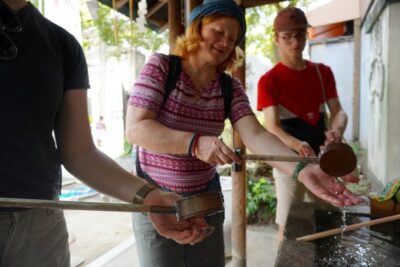 ★ 5.0Osaka E-Bike Tour with a Local GuideFrom $59
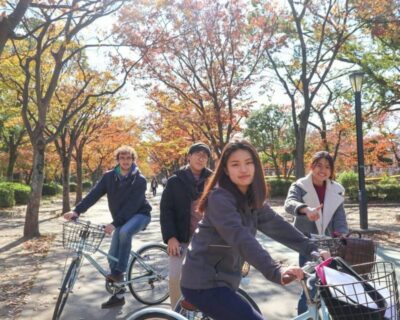 ★ 4.85-Hour Osaka Highlights Bike Tour with LunchFrom $855 hours
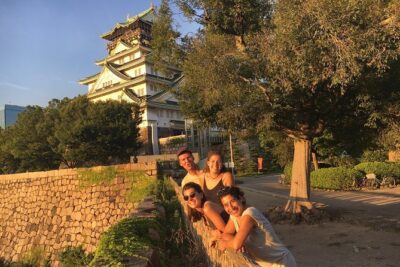 ★ 5.0Osaka in a Nutshell: Three hour bike tourFrom $72
★ 4.7Osaka E-Bike Tour With A Local GuideFrom $573 hours
★ 5.0Osaka in a Nutshell: Three hour bike tourFrom $72
★ 4.7Osaka E-Bike Tour With A Local GuideFrom $573 hours
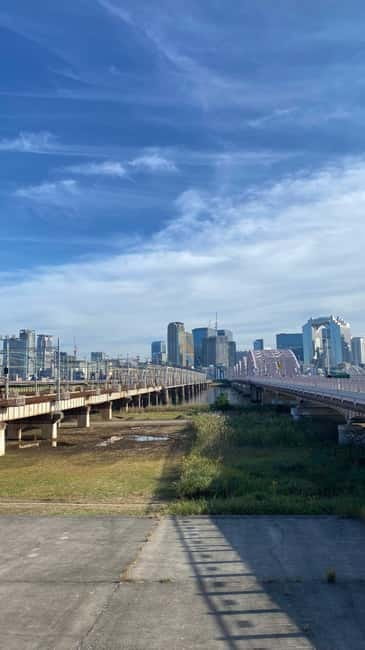 ★ 5.0Urban Canvas: Osaka Street Art Bike TourFrom $89
 ★ 5.0Osaka Half-day E-bike Adventure: Minoh Falls & Katsuoji TempleFrom $34
Browse the lists this tour appears in