
Reviewed · NARA CYCLING TOURS
Nara – Highlights Bike Tour
The best thing about this Nara tour is simple: you cover a lot of ground without spending the whole day on foot. A bicycle links Todai-ji, Kasuga Grand Shrine, Nara Park, Sagi Pond, and a 700-year-old knife shop in about three to four hours. You get temples, deer, forest paths, and a practical look at an old Japanese craft.
I like the mix of major sights and lesser-known stops, especially Kikuichi Monju Shiro Kanenaga, where you can learn about Japanese cutlery and possibly buy a knife with free blade engraving if the engraver is working. I also like the personal feel of a group capped at 10 people, with guides such as Christophe, Melody, Remi, Robert, Elodie, and Jérôme praised for friendly help and clear explanations.
The main caution is the meeting point at 297-9 Furuichicho, which sits well away from Nara Park and the central station area. The ride is manageable for many people, but hills and some sidewalk sections can feel demanding, especially for young children, older adults, or anyone not used to cycling.
In This Review
- Key details before you book
- Starting in Furuichicho, not beside the deer
- Todai-ji’s Grand South Gate comes first
- Todai-ji and the Great Buddha Hall
- A surprising stop at Kikuichi knife shop
- Kasuga Grand Shrine and its lanterns
- Nara Park and the famous bowing deer
- Sagi Pond ends the ride quietly
- How difficult is the cycling?
- Guides, group size, and the feel of the outing
- Is $72.67 a fair price?
- Who should book this Nara bike tour?
- FAQ
- How long does the Nara Highlights Bike Tour last?
- What sights does the tour visit?
- Is bicycle use included in the price?
- Is admission to Todai-ji included?
- Where does the tour start?
- Where does the tour finish?
- How many people can join the tour?
- Can a solo traveler book the tour?
- What happens if the weather is poor?
Key details before you book
- Six distinct stops in half a day: See Todai-ji, Kasuga Taisha, Nara Park, Sagi Pond, and the Kikuichi knife shop without arranging several separate visits.
- Bikes save your legs: Cycling lets you move between Nara’s spread-out sights faster than walking.
- The knife shop adds local character: Learn about traditional Japanese blades, with optional purchases and possible free engraving.
- Deer are part of the route: Nara Park gives you time to see the famous deer and enjoy the park from two wheels.
- Small groups matter: The maximum is 10 people, so the guide can help with bike adjustments, safety, and questions.
- Plan your transport carefully: A taxi to the start and a local bus back to town may be more practical than walking from the station.
Nara is easy to underestimate on a map. The main sights look close together, but Todai-ji, Kasuga Taisha, Nara Park, and the quieter eastern corners take time to connect on foot. This half-day bike tour solves that problem in a direct, useful way.
You ride a rental bicycle between the main sights, stopping for explanations and photographs along the way. The price is $72.67 per person, and it covers the bicycle, helmet, other bike gear, and all listed fees. Bottled water is also provided.
The tour earns a 4.7 rating from 89 reviews, with 92 percent recommending it. That high score makes sense when the day runs well: you see the essential Nara sights, get useful cultural context, and enjoy a little exercise without committing to a full-day expedition.
Still, this is not a sightseeing bus with a door-to-door route. You must cycle, manage some hills, and reach a starting point outside the usual park and station zone. That detail affects the value more than the ticket price does.
Starting in Furuichicho, not beside the deer
The meeting point is Japan Tour Adventure in Nara at 297-9 Furuichicho. It is near public transportation, but it is not beside Nara Park or the main Nara sightseeing stations.
I would allow extra time to reach the office. Several people found a taxi useful for getting there, then used a local bus to return to the station or central town after the ride. This is one of the most important practical points to understand before booking.
The tour ends back at the same meeting point. That makes the start and finish easy for anyone staying nearby, but less convenient if you are arriving by train for a single day in Nara. The extra transport cost and time should be part of your planning.
At the office, expect to receive your bicycle, helmet, and other cycling equipment. Guides have been praised for adjusting bikes to each rider’s height and supplying helmets and glasses. Take advantage of that setup time. A comfortable saddle and properly adjusted handlebars make a real difference on hills.
The maximum group size is 10. That is large enough to create a social outing, but still small enough for a guide to keep an eye on the group. A minimum of two participants is required for the tour to operate, so a solo booking can be canceled if nobody else joins.
A few more Nara tours and experiences worth a look

Todai-ji’s Grand South Gate comes first
The first stop is Todai-ji’s Namdaimon, or Grand South Gate. You spend about 15 minutes looking at the huge wooden gate and its two fierce guardian figures.
This is a smart opening stop. The gate gives you an immediate sense of the scale of Todai-ji before you enter the temple grounds. The guardians are not quiet decorative statues. Their powerful poses are meant to protect the sacred site, and your guide can explain how that protective role fits into Buddhist temple design.
Because the stop is short, do not expect a long lecture here. It works more as a visual introduction and a chance to settle into the group’s rhythm. You will also begin to see why a bicycle helps. Nara’s major sites are not all packed into one small square.
Todai-ji and the Great Buddha Hall
The tour then allows about 40 minutes at Todai-ji Temple, one of Japan’s most important Buddhist sites. The temple’s main wooden structure is famous for its enormous scale and is widely described as the world’s largest wooden building.
This is the day’s biggest cultural stop. The Great Buddha Hall and its immense Buddhist image can make a stronger impression in person than photographs suggest. The building’s size is the point, but your guide’s explanations help connect that scale to the temple’s religious purpose and Nara’s role in Japanese history.
Admission to Todai-ji is included, which helps the tour’s value. You are not paying the ticket price and then joining a guide only for the outside grounds.
Forty minutes is enough for a focused visit, but it is not an open-ended temple exploration. If Todai-ji is your main reason for visiting Nara, you may want more time than this tour provides. If you want to see several major sights in one morning or afternoon, the shorter visit is a fair trade.
Crowds can also affect the pace. Nara is especially busy at popular prayer times and during New Year, when many people come to worship. A bicycle tour can help you move between sites, but it cannot remove crowds inside a major temple.
A surprising stop at Kikuichi knife shop
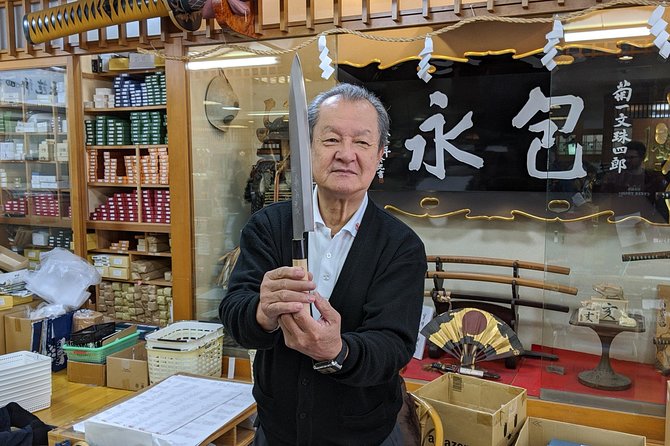
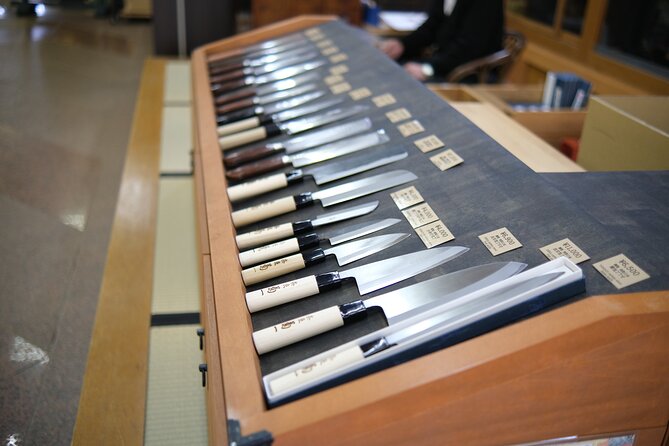
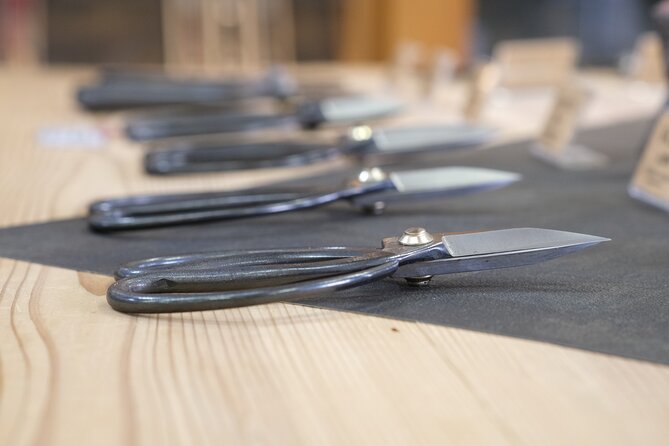
The visit to Kikuichi Monju Shiro Kanenaga is the route’s most distinctive feature. The shop has a long history connected with Japanese cutlery, and the guide explains the old craft of making knives.
This stop gives the tour a welcome change of pace. Todai-ji and Kasuga Taisha are grand religious sites. Kikuichi shows you a working tradition tied to everyday life, cooking, tools, and skilled handcraft.
You have about 15 minutes there. You can buy a knife if you wish, but purchases are extra. If the engraver is available, the shop offers free blade engraving for knives bought during the bike tour. That is a useful souvenir option, though you should treat the engraving as a possibility rather than a guaranteed part of every visit.
Several people found this shop to be one of the most memorable parts of the outing. I can see why. It is the sort of stop you might miss if you simply followed the standard temple route, and it gives you something practical to remember Nara by.
Keep your expectations clear: this is not a long knife-making workshop. It is a brief guided visit with time to learn about the shop and consider a purchase.
Kasuga Grand Shrine and its lanterns
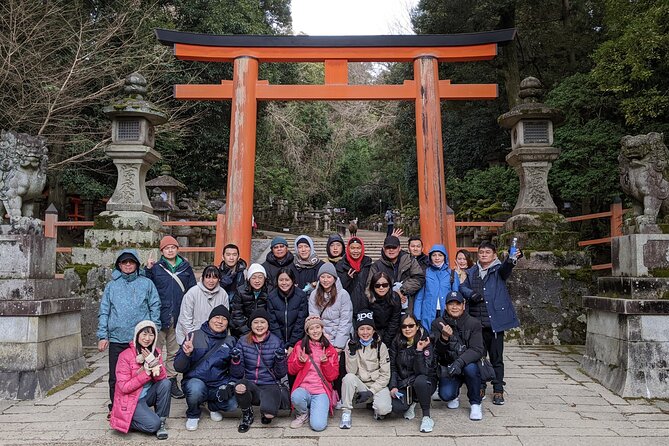
Next comes Kasuga Grand Shrine, usually called Kasuga Taisha, with about 30 minutes to explore. The shrine is known for its thousands of stone and bronze lanterns, which give the grounds a distinct look.
This stop brings you from Buddhism into Shinto practice. That contrast is one of the tour’s strengths. You do not simply collect famous buildings. You hear about two major religious traditions in Japan and see how their places of worship differ.
The lanterns are especially atmospheric, but the stop also rewards slow looking. Notice the repeated shapes, the pathways, and the way the shrine feels connected to the surrounding wooded hills. The bicycle makes it easier to reach this eastern part of Nara without using up your best walking energy.
Thirty minutes is enough to see the central highlights, but again, this is a compact tour. You may not have time to explore every side path or wait for perfect photographs. If you like taking long, careful pictures, stay aware of the group’s departure time.
Other cycling tours in Nara
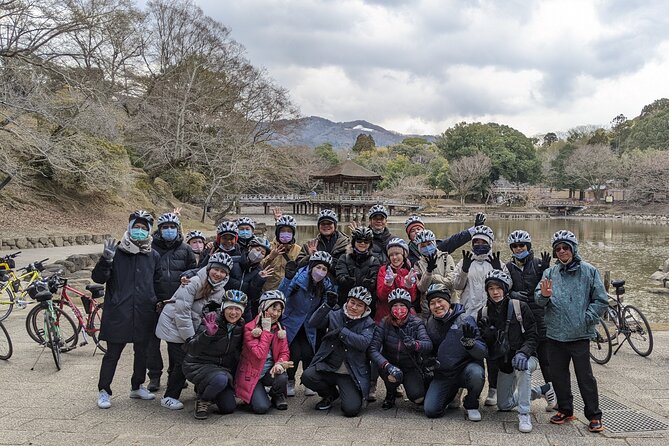
Nara Park and the famous bowing deer
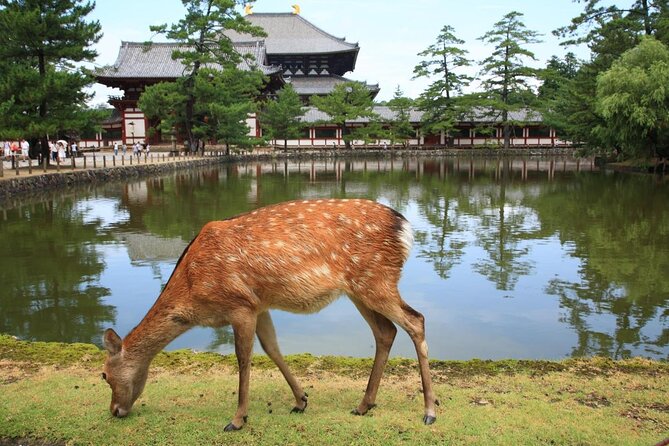
The ride through Nara Park is the most playful part of the day. You have about 10 minutes specifically set aside to watch the deer, though the route also lets you enjoy the park while cycling between sights.
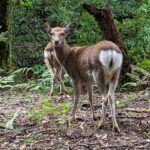
The deer are accustomed to people, and some will approach in search of food. The familiar bowing behavior can be amusing, but remember that these are living animals, not props. Keep food under control and follow the guide’s instructions.
For many people, this is the emotional high point of the tour. The deer make Nara feel different from other Japanese cities, and seeing them after visiting Todai-ji and Kasuga Taisha ties the whole setting together.
Ten minutes is brief if you want lots of deer photographs or a leisurely feeding session. The benefit is that you also see the park as part of a larger route rather than spending the entire outing in one crowded deer area.
Sagi Pond ends the ride quietly
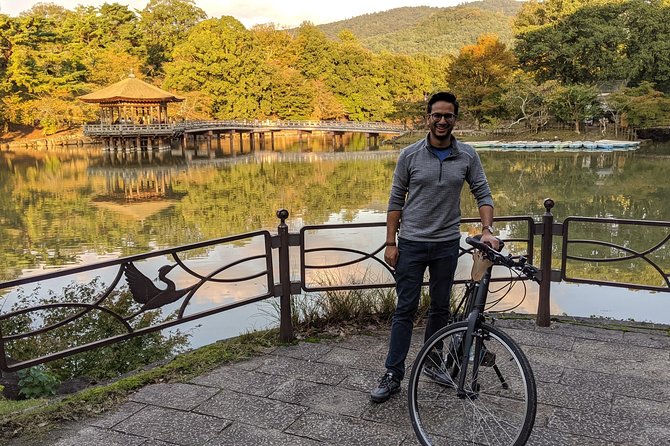
The final stop is Sagi Pond, a peaceful photo spot where you spend about 10 minutes. After the large temple, shrine lanterns, and active deer park, the pond provides a calmer finish.
This is a useful closing stop because it gives the group a chance to slow down. You can take photographs, enjoy the water, and reflect on the contrast between Nara’s monumental buildings and its quieter outdoor spaces.
Do not expect a major attraction on the scale of Todai-ji. Sagi Pond works because it is restful and photogenic. Some people felt the final section moved too quickly through the parks and would have liked more time for pictures. If photography matters to you, be ready to take quick shots rather than setting up a long session.
How difficult is the cycling?
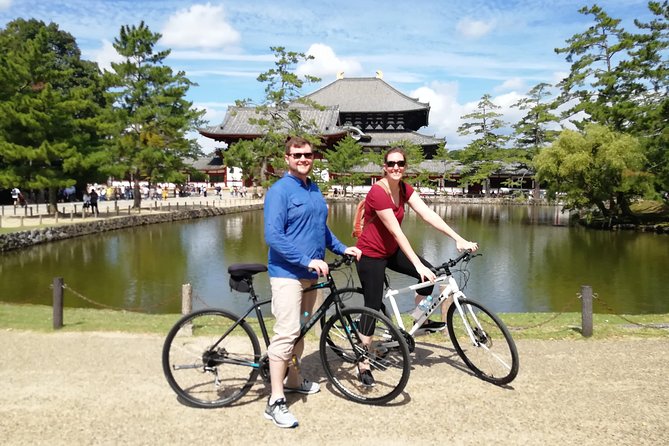
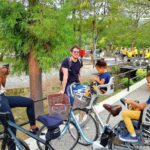
The tour is often described as moderate exercise, and that is the right general expectation. Several people found it pleasant rather than exhausting, while others said the hills and sidewalk riding were hard for a 12-year-old and a 70-year-old.
Both impressions can be true. A rider who cycles now and then may find the outing comfortable, especially with a geared bicycle. Someone unused to hills, narrow paths, or riding for several hours may find it more tiring than the short duration suggests.
The route is not presented as a race. The purpose is to reach more sights efficiently, not to train for a cycling event. Even so, you should be comfortable riding in an urban sightseeing setting and handling gentle climbs.
I would choose this tour for active adults, older children who already ride well, and anyone who wants a break from walking. I would think twice for very young children, people with balance concerns, or anyone who wants a completely effortless day.
Guides, group size, and the feel of the outing
The quality of the guide is a major part of this experience. Named guides including Christophe, Melody, Remi, Robert, Elodie, and Jérôme have been praised for friendly service, cultural explanations, bike adjustments, safety, and help when plans went wrong.
The strongest guide experiences combine clear facts with a relaxed tone. You learn about Buddhist temples and Shinto shrines while moving through the city, rather than listening to a long classroom talk. Some explanations may be stronger than others depending on the guide assigned, so the experience can vary.
The small group helps. A guide can check that everyone is keeping up, answer questions, and take photographs. One guide even helped recover a wallet left on a bus before continuing the tour, an example of the practical care that can make a stressful travel day easier.
The outing is also social. You may ride with other visitors, share the deer experience, and compare impressions at the knife shop. If you prefer exploring alone at your own pace, the fixed schedule may feel restrictive.
Is $72.67 a fair price?
At $72.67, this is not the cheapest way to see Nara. You are paying for the bicycle, helmet, gear, guide, and admission fees, plus the convenience of connecting several sights in one organized route.
The value is strongest if you have only a few hours in Nara. A self-guided walking route costs less, but you may cover fewer locations and spend more time navigating between them. A bicycle also gives you a different view of Nara than a train, taxi, or standard walking tour.
The price feels less attractive if you must add a taxi to the starting point, a bus from the finish, meals, drinks beyond the supplied water, and any knife purchase. It also feels high if you want extended time inside each temple or shrine.
For a first visit with limited time, I think the price can be justified. For a slow, temple-focused visit, I would consider booking the sights independently and spending the money on extra time at Todai-ji and Kasuga Taisha.
The tour has free cancellation up to 24 hours before the start time. Changes or cancellations inside that window are not refunded. Poor weather can also cancel the ride, in which case you are offered another date or a full refund.
Who should book this Nara bike tour?
Book it if you want to see Nara’s headline sights in three to four hours, enjoy moderate exercise, and value a guide who can explain the difference between Buddhist and Shinto sites. It is especially useful for a day trip when walking between all the stops would take too long.
The tour also suits anyone who enjoys unusual local details. The Kikuichi knife shop gives the route more personality than a simple temple-and-deer circuit, and possible blade engraving adds a personal souvenir option.
Think carefully before booking if you need a gentle, fully accessible sightseeing day, dislike cycling near pedestrians, or want to spend a long time at each stop. The remote meeting point is another real drawback.
Overall, I would book this tour for an active first look at Nara. You will not see every corner, but you will get a well-chosen introduction to the city’s temples, shrines, deer, parks, and craft traditions without wearing out your feet.
FAQ
How long does the Nara Highlights Bike Tour last?
The tour lasts approximately three to four hours.
What sights does the tour visit?
The route includes Todai-ji’s Grand South Gate, Todai-ji Temple, Kikuichi Monju Shiro Kanenaga knife shop, Kasuga Grand Shrine, Nara Park, and Sagi Pond.
Is bicycle use included in the price?
Yes. Bicycle use, a helmet, other bike gear, and all listed fees and taxes are included.
Is admission to Todai-ji included?
Yes. Admission to Todai-ji Temple is included. The other listed sightseeing stops do not have an admission charge.
Where does the tour start?
It starts at Japan Tour Adventure in Nara, located at 297-9 Furuichicho, Nara, 630-8424, Japan.
Where does the tour finish?
The activity ends back at the same meeting point.
How many people can join the tour?
The maximum group size is 10 people.
Can a solo traveler book the tour?
Yes, a solo traveler can book directly, but at least two guests are required for the session to operate. If the minimum is not met, you may be offered another date or a full refund.
What happens if the weather is poor?
The tour requires good weather. If bad weather causes cancellation, you will be offered a different date or a full refund.
More Cycling Tours in Nara
More Nara Cycling Tours in Nara
More tours in Nara we've reviewed
Nara Cycling Tours, compared.
 ★ 4.8E-Bike Nara Highlights – Todaiji, Knives, Deer, ShrineFrom $903h 30m
 ★ 5.0Nara: Bike Tour in Ancient Capital UNESCO World HeritageFrom $222 hours
 ★ 4.9Nara: City Highlights Shared Group or Private Bike TourFrom $703 hours - 210 minutes
 ★ 4.5E-Bike Nara Highlights – Todaiji, Knives, Deer, Shrine, and GemsFrom $92
 ★ 5.0Nara – Heart of Nature Cross Bike TourFrom $275
 ★ 5.0Nara – Private Family Bike TourFrom $195
Browse the lists this tour appears in