
If you’ve cycled the Shimanami Kaido once and you’re trying to decide where to ride next in Japan, here is my advice: don’t go back. Go to the Tobishima Kaido instead. It’s an hour west, the bridges are smaller, the crowds basically don’t exist, and the riding is everything most people actually wanted Shimanami to be before the Lonely Planet write-ups turned the lead-out into a rolling traffic jam on summer weekends.


Seven islands. Seven bridges. About 30km of pavement on the shortest line, 46–50km if you take all the proper coastal detours, and around 80km if you do an out-and-back loop hitting both sides of every island. Toll-free if you’re on a bike. Largely flat. So quiet that the day I rode it I went over an hour without seeing a single car on Toyoshima’s south coast.
People call it Shimanami’s “quiet sister route.” That’s polite. It’s the better ride. Here’s how to do it properly.
In This Article
- Tobishima Kaido at a glance
- Why it beats the Shimanami (yes, really)
- The traffic just isn’t there
- The bridges are weirder and prettier
- Mitarai exists
- Where to start: Kure or Imabari?
- Starting from Kure (Hiroshima side)
- Starting from Imabari (Ehime side)
- The ferry timetable you actually need
- Picking a bike
- Tobishima Rental Bike (the easy answer)
- Shimanami Rental Bike (the workaround)
- GIANT Store (the upgrade)
- The route, island by island
- 1. Shimo-Kamagari (下蒲刈島)
- 2. Kami-Kamagari (上蒲刈島) and Kenmin-no-Hama
- The Oura Tunnel problem (and how to avoid it)
- 4. Toyoshima (豊島) and the high bridge
- 5. Osaki-Shimojima (大崎下島) and the Mitarai detour
- Where to stay in Mitarai
- 6. Oocho village and the Yamakiyo orange juice
- 7. Okamura Island (岡村島)
- The food situation
- The recommended lunch list
- The film-location thing
- Things that will go wrong
- Punctures, with no nearby shop
- Missing the last ferry
- Weekend closures
- The bilingual situation
- Building it into a longer trip
- The Shimanami / Tobishima Golden Course (2 days)
- The Setouchi Triangle (3–4 days)
- The Hamakaze Kaido extension
- The Setouchi loop alternative
- The long haul
- What I’d actually do, if you asked me
Tobishima Kaido at a glance
The full name is Akinada Tobishima Kaido (安芸灘とびしま海道). It runs from Kawajiri-cho in Kure City, Hiroshima, out across seven islands in the Seto Inland Sea, and ends at Okamura Island, which (administratively) belongs to Imabari City in Ehime Prefecture. The prefectural border sits on the bridge between Osaki-Shimojima and Okamura, so by the end of the day you’ve crossed two prefectures on a bicycle.
| Distance option | Route | Best for |
|---|---|---|
| ~15km | Loop of Shimo-Kamagari only | Casual riders, families, half-day |
| ~30km | Kawajiri to Okamura, shortest line | One-way to ferry, day-trip from Kure |
| ~46–50km | Kawajiri to Okamura with the south-coast detours | What I’d actually recommend: the riding people came for |
| ~80km | Out-and-back, both coasts of every island | Strong day, no ferry connection needed |
| 2 days | The “Shimanami / Tobishima Golden Course” via Imabari | The proper trip; combine with the Shimanami Kaido cycling guide |
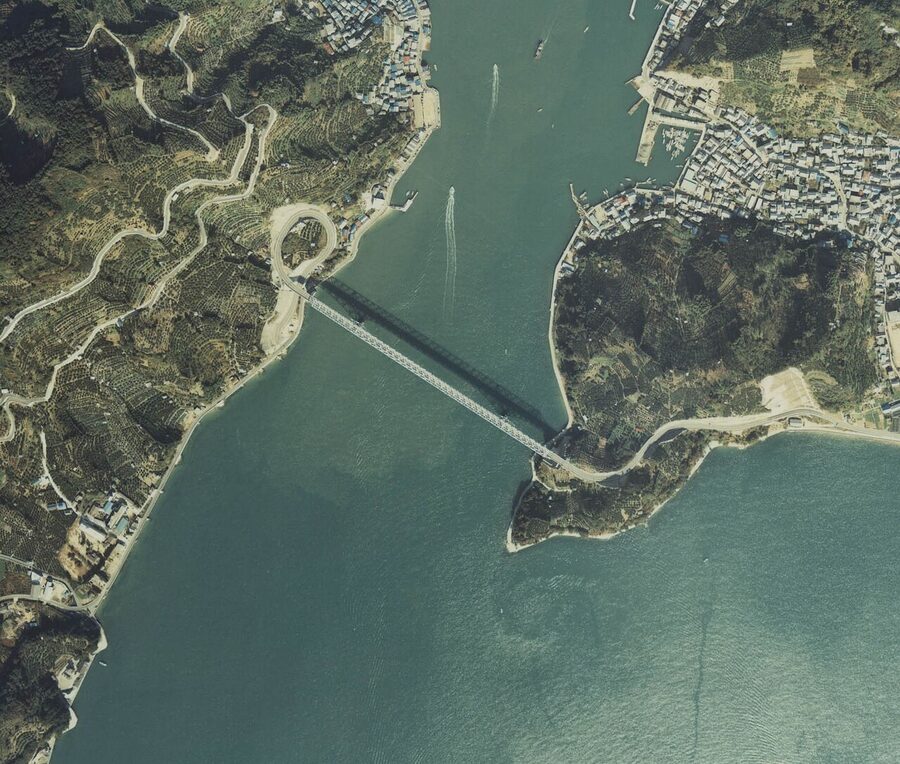
The seven bridges, in order from the Hiroshima side: Akinada, Kamagari, Toyoshima (the big suspension one), Toyohama, Heira, Nakanoseto, and Okamura Great Bridge. Pedestrians and cyclists pay nothing on any of them. Cars get one toll, on the Akinada Bridge, which is also the one that drops you onto the islands at the start.
Why it beats the Shimanami (yes, really)
I want to be careful here, because the Shimanami is genuinely a great ride and I’ve recommended it at length elsewhere. But the two routes are not the same kind of cycling, and most foreign riders who’ve only done one of them assume Shimanami is the gold standard.
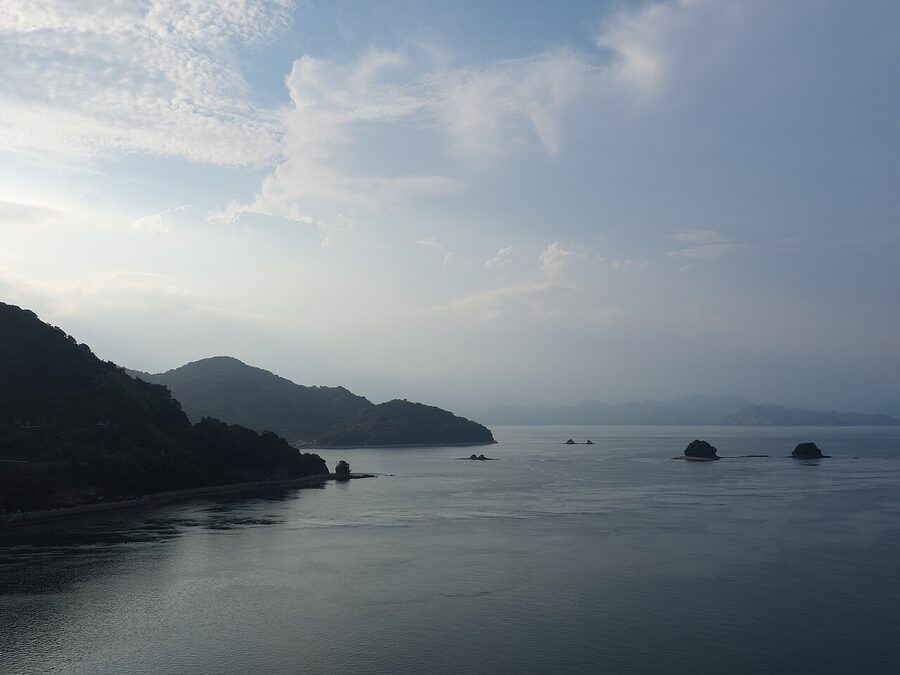

Three things separate Tobishima from Shimanami if you’re a cyclist rather than a tourist on a rental:
The traffic just isn’t there
Shimanami’s main island roads carry real car traffic on summer weekends, especially the segments around Setoda and Imabari. On Tobishima, the south-coast roads of Osaki-Shimojima, Kami-Kamagari and Shimo-Kamagari can be effectively empty. Locals use the islands; tourists basically don’t. There are no convenience-store coaches and very few rental cyclists. Every blog post about the route mentions this and they’re all telling the truth.
The bridges are weirder and prettier
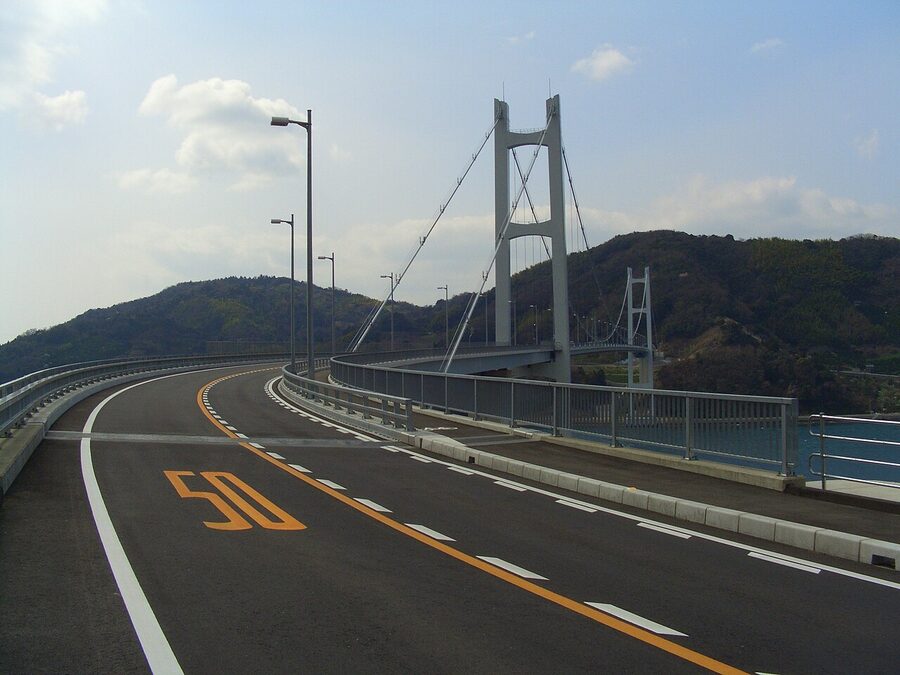
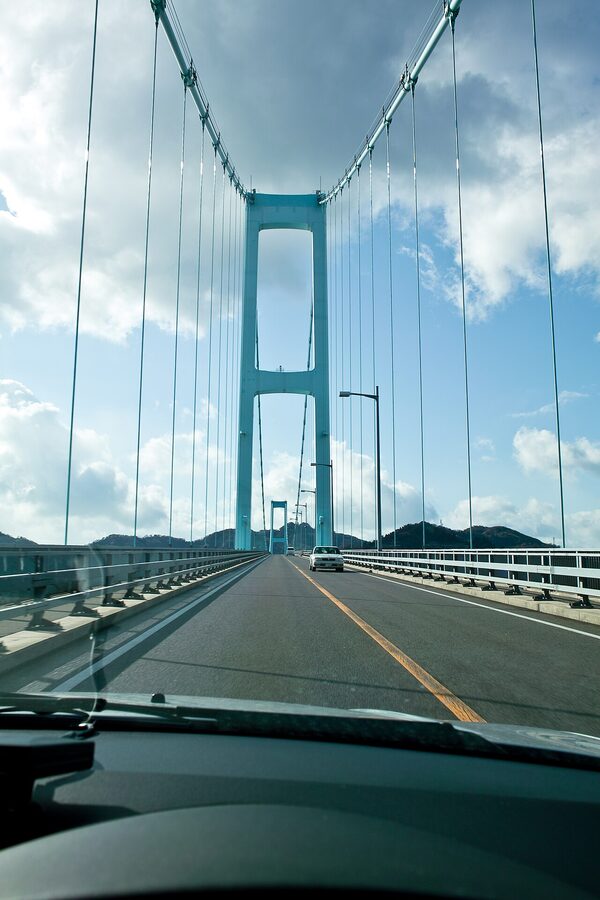
The Shimanami’s bridges are world-class engineering. Tobishima’s are a mixed bag: suspension on Toyoshima, light-blue truss girder spans on Toyohama and Kamagari, an unusual loop section called Murokihara on Toyoshima. That variety is the point. They feel hand-built and oddly personal. The Toyoshima Bridge in particular is the high point of the route in both senses: tallest bridge clearance, longest climb-up, and the best sea view on the whole ride.

Mitarai exists
This is the real one. Mitarai (御手洗) is an Edo-period port preservation district on Osaki-Shimojima: a tiny grid of merchant houses, shrines, alleys and a 1937 wooden theatre, designated a national Important Preservation District in 1994. Shimanami has nothing like it. The whole village is the size of a city block and you can walk it in 20 minutes. That you can ride a bike to it from a bridge, then sit and have lemon cake in a 200-year-old guesthouse, is the kind of thing that justifies the trip on its own.
I’ll come back to Mitarai. It’s the centre of gravity for this ride.
Where to start: Kure or Imabari?

You have two options for getting onto the route, and which you pick is the single biggest planning decision you’ll make.
Starting from Kure (Hiroshima side)
The Hiroshima approach is the practical one. JR Kure Line runs roughly hourly from Hiroshima Station to Aki-Kawajiri or Nigata stations, either of which drops you within easy riding distance of the Akinada Bridge. From Aki-Kawajiri it’s about 15–20 minutes of flat road to the bridge approach. The bridge has a sidewalk, the toll booth is for cars only, and you ride straight through without paying.
Kure itself is a substantial city with regular hotels and connections back to Hiroshima, which gives you a clean sleep-eat-train base if you want to ride out and back in one day. This is the start point I’d recommend the first time.
Starting from Imabari (Ehime side)
The Imabari approach is the romantic one. You take a ferry from Imabari Port to Okamura Port, ride west across all seven bridges to Kawajiri, and (in theory) take a train back. In practice this works best as the second half of a Shimanami trip: ride Shimanami south from Onomichi to Imabari one day, sleep, ferry to Okamura the next morning, ride Tobishima to Kure. The locals call this the Shimanami / Tobishima Golden Course and it’s exactly as good as it sounds.
The catch: ferries between Imabari and Okamura run only a handful of times a day, and they have firm cut-offs. You need to know the timetable before you commit.
The ferry timetable you actually need
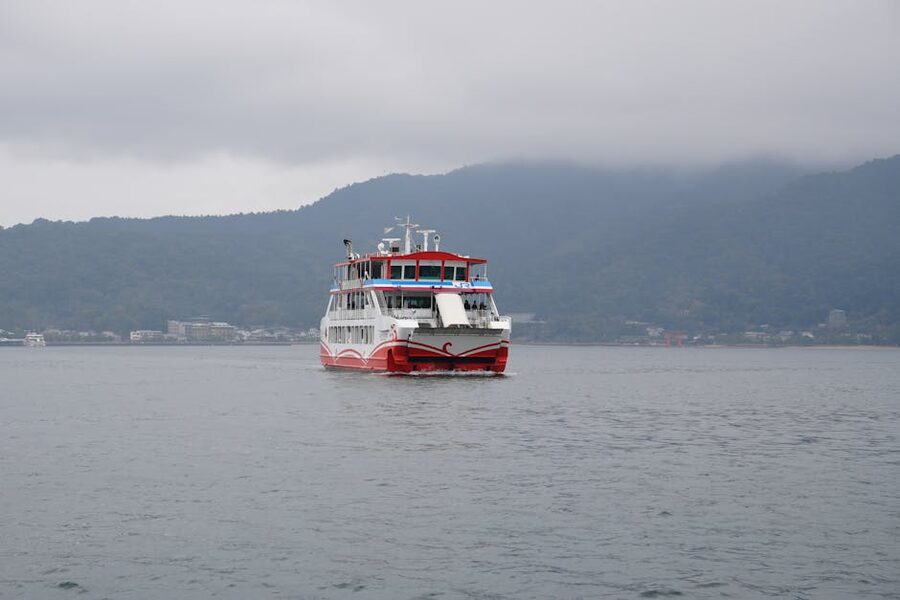
Two operators run the Imabari–Okamura service. The car ferry Sekizen takes anything; the passenger ship Tobishima has a dedicated rack for up to 10 bikes. Both have loaded bicycles since February 2017. As of writing, the schedules look like this:
| Direction | Departures (approx) | Crossing time |
|---|---|---|
| Imabari Port → Okamura | 07:20, 08:25, 09:30, 12:00, 14:45, 15:30, 17:50, 19:00 | ~55–60 min |
| Okamura → Imabari Port | 06:20, 06:50, 08:30, 09:35, 12:30, 13:30, 16:15, 17:35, 18:05 | ~55–60 min (last ferry adds 30 min waiting at Munakata) |
The 18:05 from Okamura is the last boat back. Miss it and there’s no late option: the islands have very few accommodation options and you’ll be hitchhiking or sleeping rough. Always plan to be at Okamura Port by 17:30 if you’re heading back to Imabari. Always check the latest timetable on the port operator’s site before you go; this is the kind of schedule that gets adjusted seasonally.
Imabari Port phone for live operation status: 0898-31-9310 (06:00–18:40).
Picking a bike
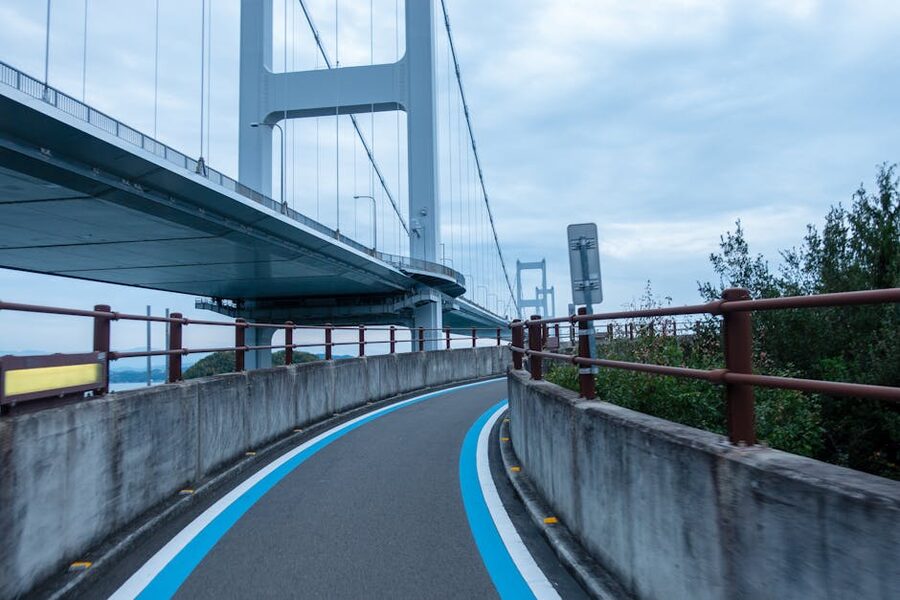
Until 10 August 2017 there was no rental option on the Tobishima Kaido at all. You had to bring your own bike across, ride a Shimanami rental over (which had no Tobishima return point), or rent in Kure and ride out. That changed when Cottage Kajigahama on Shimo-Kamagari launched Tobishima Rental Bike, the first proper rental scheme on the route.
Tobishima Rental Bike (the easy answer)
Tobishima Rental Bike does one-way rentals with delivery and drop-off, which is exactly what you want. You book ahead, the staff bring the bike to your start point at the time you specify, and you drop it at any of their points: Okamura Port, Oocho Port, Ocho Port, Kenmin-no-Hama Beach, Cottage Kajigahama on Shimo-Kamagari, or JR Nigata Station. They also do on-the-road puncture repairs, which you’ll want.
Pricing as of writing:
- Cross bike or small-wheel bike: ¥1,000 / 3 hours, ¥2,000 / 8 hours
- E-bike (electric assist): ¥1,500 / 3 hours, ¥3,000 / 8 hours
- Kid’s bike: ¥500 / 3 hours, ¥1,000 / 8 hours
- Helmet rental: included
- Delivery to a non-base point: +¥1,000 per bike
- Drop-off at a non-base point: +¥1,000 per bike
Worked example: deliver one cross bike to Okamura Port, ride 30km to JR Nigata Station, drop it there. Total: ¥2,000 + ¥1,000 + ¥1,000 = ¥4,000. For a one-way day trip on a properly fitted bike with backup support, that’s an obvious yes. Reservations through Cottage Kajigahama:
- Address: 839-16 Shimojima, Shimo-Kamagari-cho, Kure City, Hiroshima
- Tel: 080-2927-2504
- Official site
Shimanami Rental Bike (the workaround)
Shimanami’s rental network has 10 terminals along the Onomichi–Imabari route plus the JR Imabari Station cycling terminal. They do not service Tobishima (you can’t drop a bike on the islands), but if you’re doing the Golden Course you can rent one in Imabari, ferry it across, ride Tobishima as a long out-and-back, and ferry the same bike back to return it at Imabari. Cross-bike rental is ¥3,000 a day. The deposit-refund system was abolished in September 2023, so the fee structure is now genuinely simple.
The catch is the JR Imabari Station Cycling Terminal opens at 08:00, which means you can’t catch the 08:25 boat; you’ll be on the 09:30. The next one’s not until 12:00, so being slow getting on the road compresses your riding time fast.
GIANT Store (the upgrade)
If you care about the bike, GIANT Imabari at JR Imabari Station rents proper kit: aluminium road bikes from ¥5,000/day, carbon road from ¥7,000/day, premium carbon ¥13,000/day, e-bikes ¥10,000/day, cross bikes ¥4,000/day, kids ¥3,000/day. Open 09:00–19:00, closed Tuesdays. There’s also a GIANT Onomichi store inside the ONOMICHI U2 complex on the same prices.
For Tobishima itself, the cross bike is the right call. There’s nothing on the route that rewards a carbon road bike: rolling coastal pavement, the occasional bridge climb, no extended descents, and you’ll want to stop often. Save the road bike for the Shimanami day.
The route, island by island
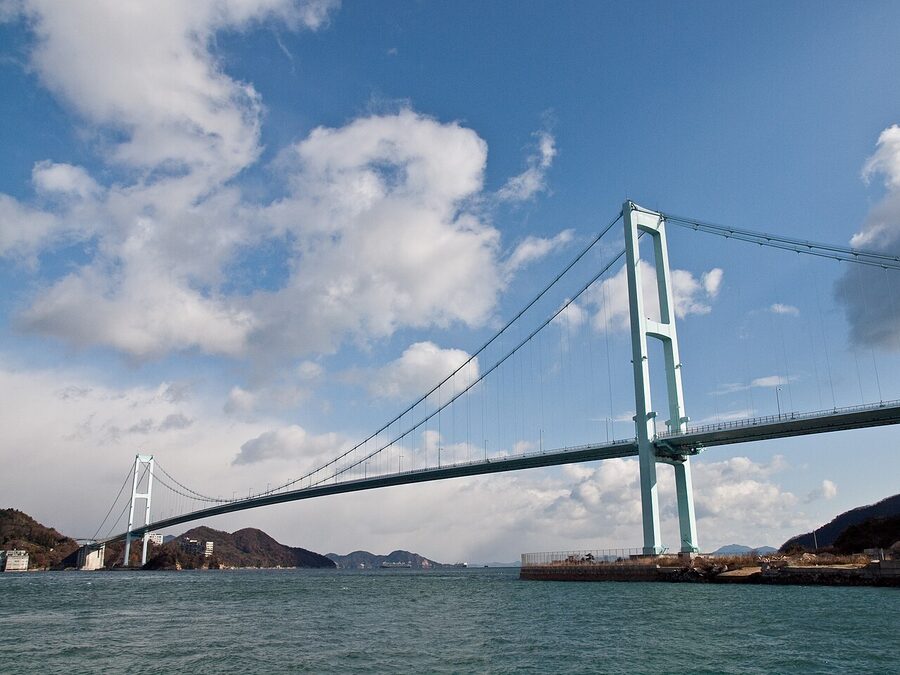

What follows is the Hiroshima-to-Okamura sequence, which is the way I’d ride it the first time. Reverse it if you’re coming in from Imabari.
1. Shimo-Kamagari (下蒲刈島)
You enter the route at the Akinada Bridge from Kawajiri. The first island, Shimo-Kamagari, was a major Edo-period stopover for travellers heading up to Osaka and Kyoto: daimyo on their way to Edo, Dutch traders out of Dejima in Nagasaki, and (most famously) Korean diplomatic delegations of which there were more than a dozen during the Edo period. The Shotoen Museum covers all of this and has reconstructed displays of the lavish receptions; if you’re into history at all, give it 30 minutes.
Within 5 minutes’ ride is the Rantokaku Art Gallery, an annex of the same complex showing modern Nihonga-style painters like Yokoyama Taikan and Heitaro Fukuda, plus an insect museum and an Edo-period tea house attached. Shimo-Kamagari is genuinely worth a visit even if you weren’t cycling.
For lunch on Shimo-Kamagari, Cafe Luethuyi is a clean, modern seaside place where the speciality is rice topped with roast beef. Open through the lunch window. Skip the souvenir junk shops near the bridge approach and ride straight to it.
2. Kami-Kamagari (上蒲刈島) and Kenmin-no-Hama

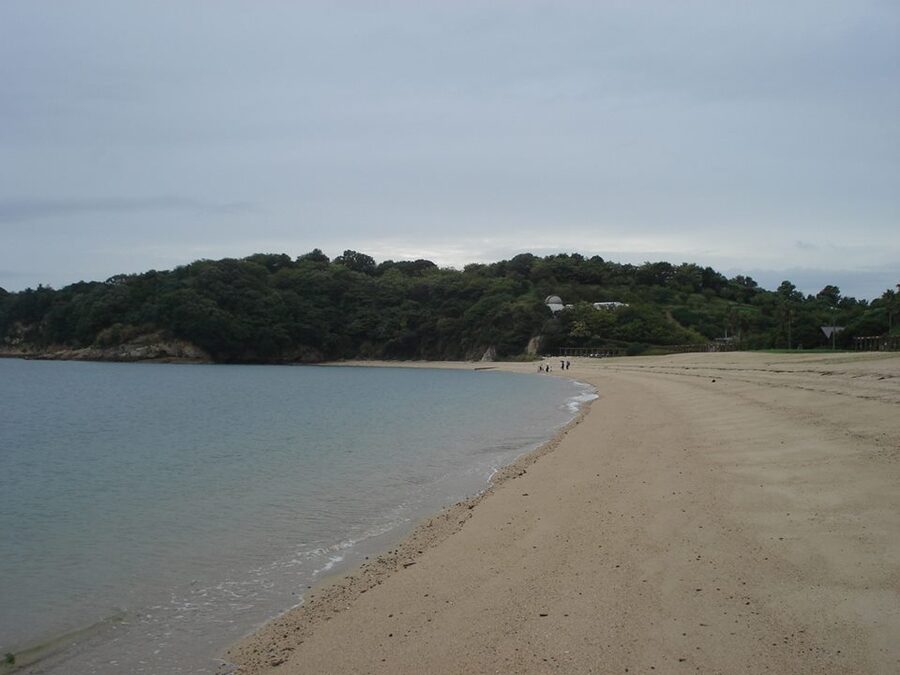
Cross the Kamagari Bridge and you’re on Kami-Kamagari. Take the south coast: it’s a long, flat road with steep citrus-planted hillsides on your left and open sea on your right, and there’s almost nothing on it except the occasional fisherman’s truck.
About halfway along is Kenmin-no-Hama (literally “the people’s beach” of Hiroshima Prefecture) , ranked in Japan’s top 100 beaches, generally agreed to be the best in Hiroshima Prefecture. There’s a hot spring, an observatory, a fruit-picking facility and accommodation. The Kagayaki-no-Yakata wooden lodging here has all-room sea views and a separate Yasuragi-no-Yakata annex with seaside onsen baths; if you want to overnight on the route somewhere other than Mitarai, this is the option.

For lunch, Megumi-no-Oka Restaurant sits on a hillside with a panoramic view across the Akinada Sea to the Shikoku mountains. The set menu uses local ingredients in lots of small bowls, and the price is reasonable for the view you’re getting. Crowded on weekends, often near-empty midweek.
The Oura Tunnel problem (and how to avoid it)
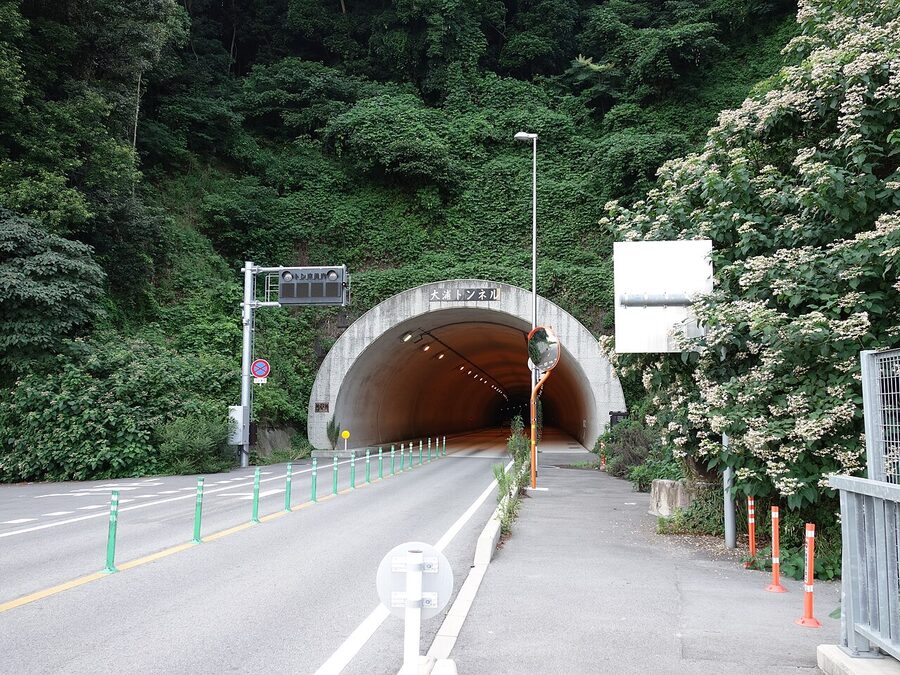

The official Hiroshima Prefecture route from Kenmin-no-Hama to the Toyoshima Bridge runs through the Oura Tunnel, a roughly 1km bore on Prefectural Road 356. Cars and bikes share the carriageway, there’s a posted-bollard divider down the middle that prevents cars from passing safely, and even with light traffic you can get pressured by drivers who can’t get round you. There’s a pull-out about halfway through if you want to let them past.
Better: turn right just before the tunnel mouth onto the small farm road that climbs up and around through the forest. The surface isn’t perfect (expect rough concrete in stretches), but it adds maybe 10 minutes, drops you on the same coast on the far side, and avoids the tunnel entirely. You can also use the tunnel sidewalk if you don’t want to deal with either, but watch the sudden curve at the pull-out exit.
4. Toyoshima (豊島) and the high bridge
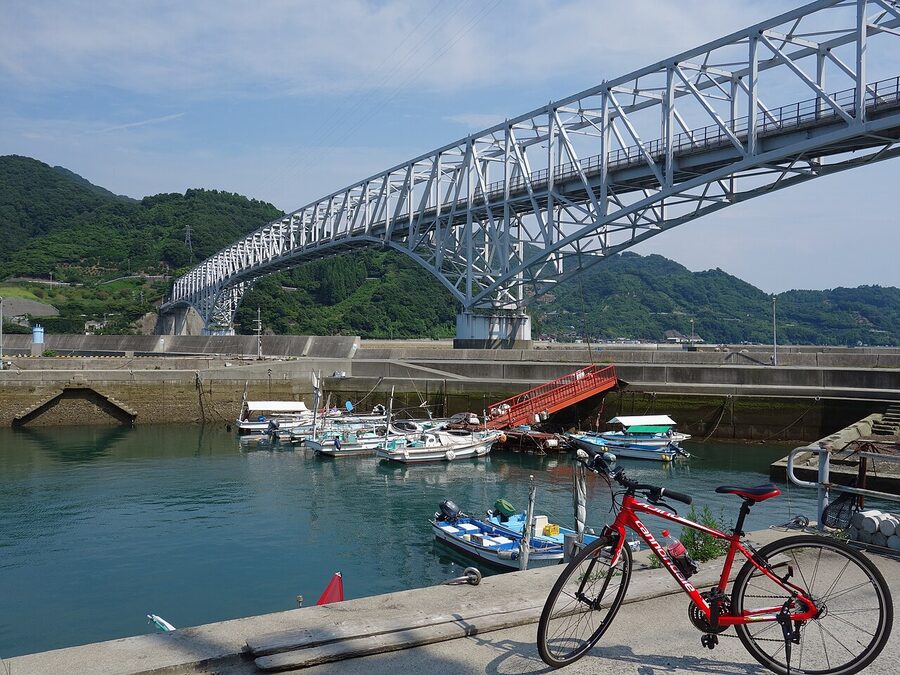

The Toyoshima Bridge climb is the only meaningful pull on the whole route. The bridge sits at the highest clearance point on the Tobishima Kaido and you ride up to it on a long, steady gradient that pegs around 8–9% near the top. Five minutes of work for a five-second view that justifies the entire trip: the road winds underneath you, the sea opens out south to Shikoku on a clear day, and the smaller islands stack into the haze.
On Toyoshima itself, look for the Murokihara loop bridge a little inland from the coastal road, an unusual cream-and-light-blue spiral span that you’d ride past entirely if you didn’t know to look. Pretty bridge, almost zero traffic, photogenic from the deck.
For lunch on Toyoshima, Okonomiyaki Mari-chan is the kind of restaurant you find by getting lost in the back alleys. The locals will literally point you to it when they see you on a bike. Cutlass-fish ramen (Toyoshima ramen) is the move alongside the special okonomiyaki. Heart-warming local place with no guidebook polish.
5. Osaki-Shimojima (大崎下島) and the Mitarai detour
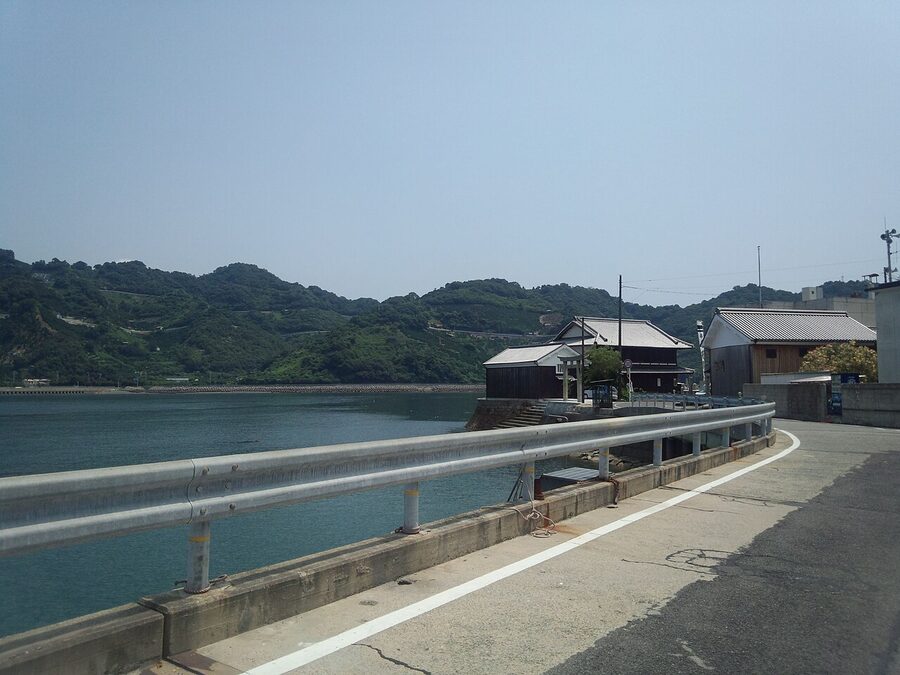

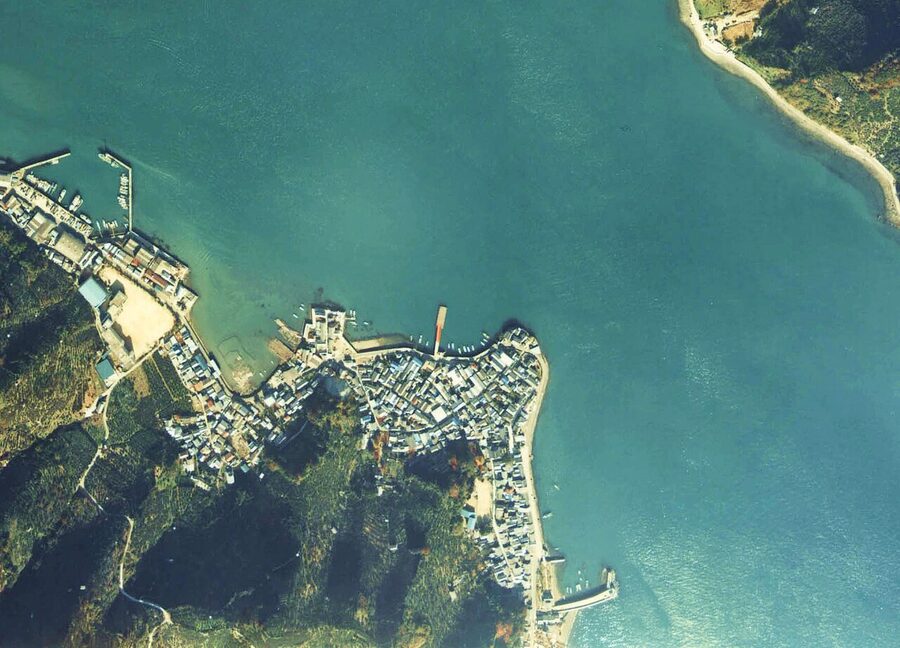
This is the thing. Mitarai (御手洗) is a tiny preserved port village on the southeast corner of Osaki-Shimojima, and it is (without exaggeration) one of the best-preserved Edo-period townscapes in western Japan. The official Hiroshima Prefecture cycling route does not go through it. You should go through it anyway.
The story is that Mitarai grew up in the mid-17th century as a port where ships waited for favourable tides and winds before continuing through the inland sea. By the late Edo period it was a major stopover, and that meant the usual port-town economy: ships needed restocking, sailors needed entertainment, and the village had a famous concentration of “tea houses” (which is to say, brothels) that kept it economically viable long after steam engines made the tide-and-wind problem obsolete.
What’s preserved is the four-era architectural layering, Edo through Meiji, Taisho and Showa, densely packed along narrow alleys. The whole district is about the size of a city block. A short list of what to see:

- Wakaebisuya: the most famous of the former tea houses, now a small museum. The tatami rooms upstairs still feel like the rooms they were.
- Otomeza: a 1937 wooden theatre, restored to working condition, that puts on occasional performances.
- Tomoda House: a wealthy merchant’s residence, well-preserved, ground floor open to visitors.
- Tenmangu Shrine: tucked away at the back of the village, enshrines the scholar-poet Sugawara no Michizane. The name Mitarai (literally “hand-washing”) supposedly refers to the legend that Empress Jingu washed her hands in the stream that runs through here.
- The Chisako Wharf stone breakwater, built in 1829, with a tall stone lantern donated by the village headman as a beacon for kitamae-bune trading ships. It was lit nightly until around 1879.
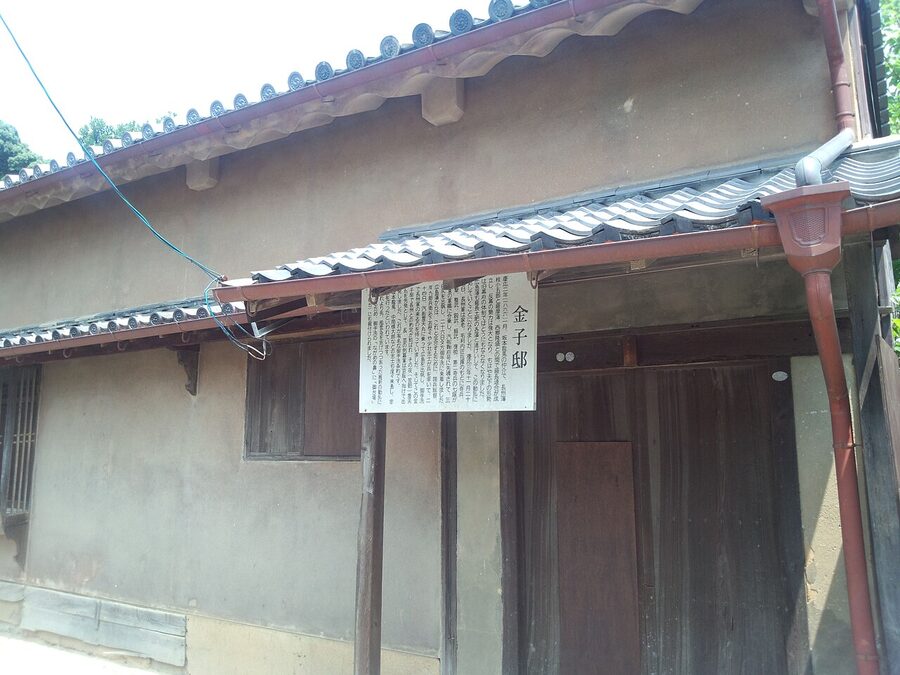

If you’re a cyclist, there’s a quiet bonus stop: a small stone shrine inside Tenmangu’s grounds dedicated to Harukichi Nakamura, a Mitarai-born cyclist who circumnavigated the world by bicycle in the early 20th century, broadly considered Japan’s original bike tourer. Round-the-world riders who pass through usually stop in to pay respects. The shrine is small and easy to miss; ask in the village if you can’t find it.
Where to stay in Mitarai
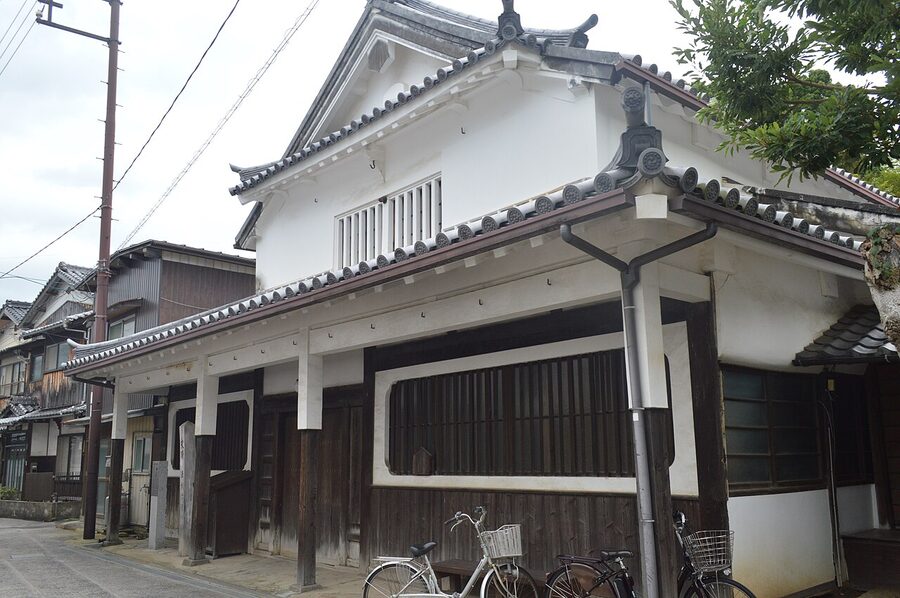

Guesthouse Kusushi opened in 2017 in a renovated former clinic building, painted a striking light blue and orange that stands out against the preservation district’s mostly muted tones. It’s the first proper guesthouse on the Tobishima Kaido itself and the obvious answer if you want to overnight in the village. Reservations are a phone call, the room count is small, and weekends book out fast in spring and autumn.
For a coffee or lunch in Mitarai, two cafes worth the stop:
- Cafe Wakacho uses an Edo-period sailors’ inn building, tatami room on the second floor, lemon-based Japanese sweets, sea view through the original timber screens. Weekends only. Plan around this one if it matters.
- Shiomachikan is the village’s tourist information cum souvenir shop cum cafe, opened 2015, and a useful place to ask about local opening hours that change weekly.
6. Oocho village and the Yamakiyo orange juice
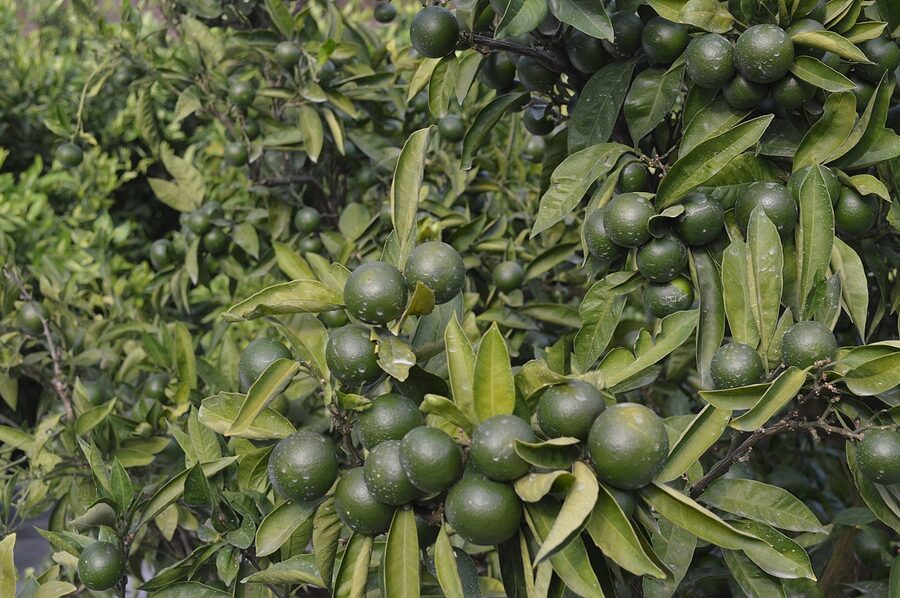

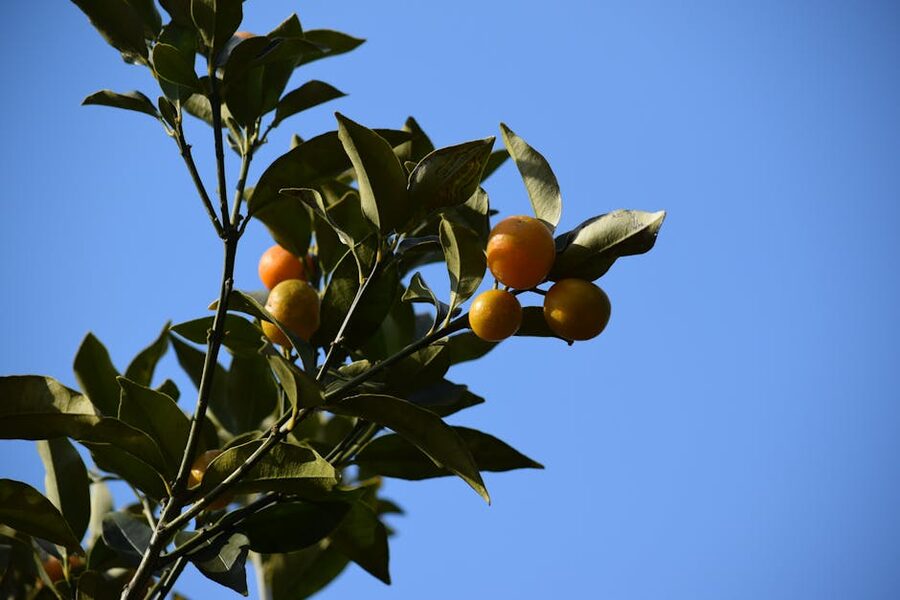
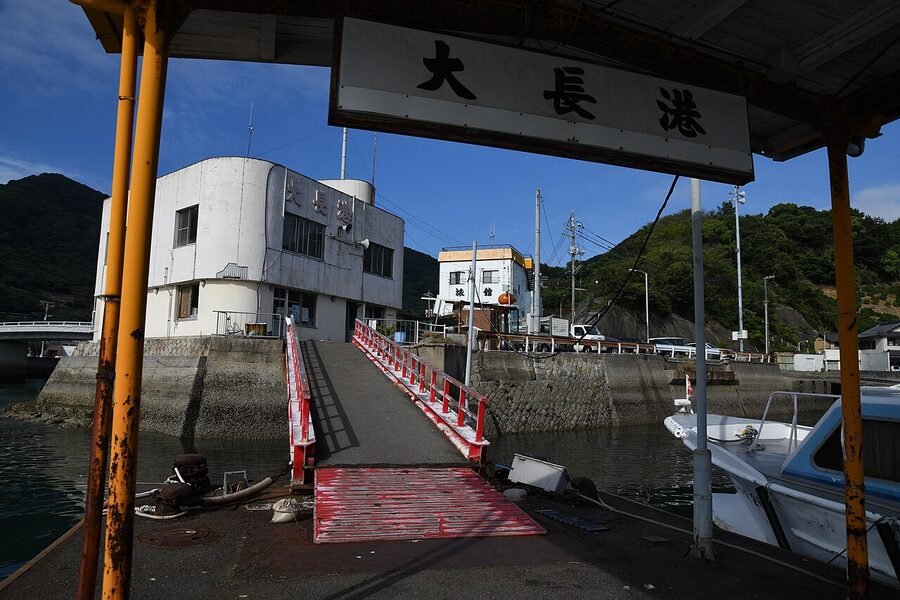
From Mitarai, the road north on Osaki-Shimojima passes through Oocho (大長), a small mandarin-orange village whose alleys haven’t really changed in 50 years. The brand Oocho mikan is what made the place; you’ll see the trees stepped up the hillsides as you ride.
Look for the Yamakiyo citrus stand on the seaside road between Oocho and Mitarai. Two glasses of fresh-squeezed juice from different orange varieties for ¥100 each. The stand is small, signage is in Japanese only, and the owner sometimes runs out by mid-afternoon. It’s worth the stop. There’s also a very old pharmacy, Shiseido, in the village proper that’s been there forever, and Utsu Shrine in the back alleys.
7. Okamura Island (岡村島)
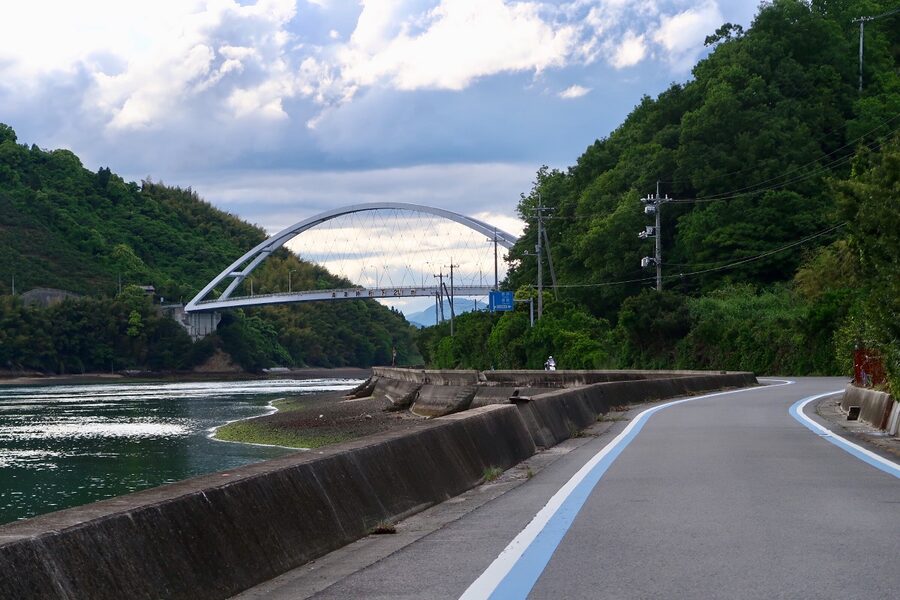

The last three bridges (Okamura Great Bridge, Nakanoseto Bridge, and the small Heira Bridge) are quick spans across two uninhabited islets to Okamura Island. The prefectural border between Hiroshima and Ehime sits on the Okamura Great Bridge. Cross it and you’re technically in Imabari City, despite being closer to Kure than to Imabari proper. There’s no signage; you just notice the road numbers change.
Sekizen village at the eastern end of Okamura is the small fishing settlement where the route ends and the ferry dock sits. A working harbour, a few houses, the JA Sekizen branch office, and an elementary school. Quiet. The kind of village where a passing cyclist gets a wave from anyone outside.
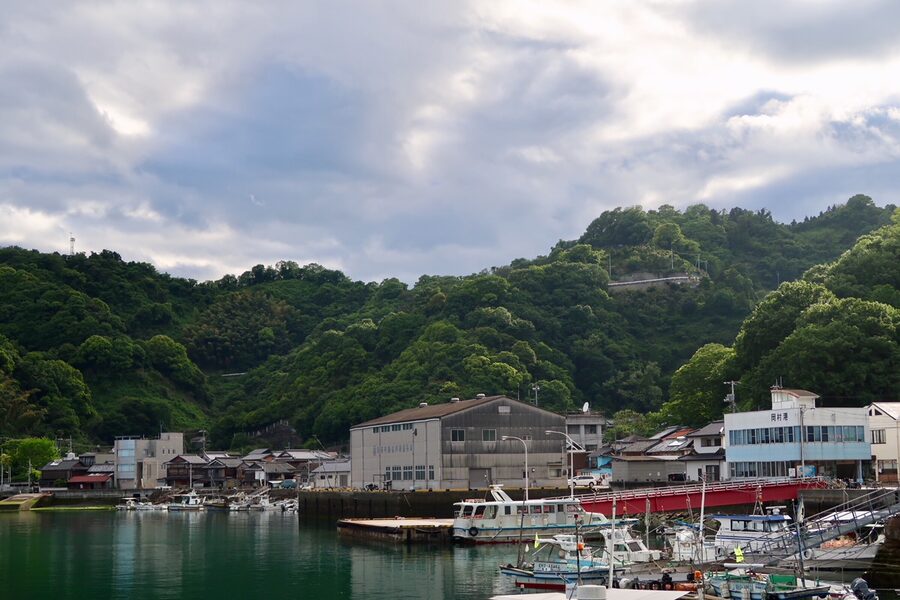

For coffee on Okamura, Maruseki Cafe is run by Mr and Mrs Narita, who moved out from Tokyo as part of a community-revitalisation programme and turned a small building into the only proper cafe on the island. Hand-roasted coffee, nel-drip, homemade pound cakes using the island’s lemons and oranges, and a “Himekko pudding” served in actual eggshells that’s their signature. Open 09:00–17:00; check ahead for off-season days.
The food situation
Fair warning: there are very few convenience stores on the Tobishima Kaido. The route covers six small islands and a good number of stretches have nothing: no 7-Eleven, no Family Mart, no automatic supermarket. On weekends some grocery stores close entirely. Some bigger shops are weekday-only.
What this means in practice:
- Buy food before you cross the Akinada Bridge. There’s a small convenience-style shop in front of Okamura Port and a small souvenir shop at Ocho Port, but neither is reliable for a cyclist’s actual lunch.
- Check restaurant opening days the morning you go. Many places are weekend-only, and many are closed Tuesday or Wednesday in addition to whatever the seasonal pattern is. The Cyclonoie Tobishima Toso Map keeps these reasonably current; ask at your guesthouse the night before.
- Vending machines are everywhere. Hydration is not the issue. Food is.
- Ramen Tokumori on Osaki-Kamijima (which you’d reach by the Ocho ferry, not by bridge) is the most famous ramen shop in the wider area: soy-sauce island ramen, locals queue at lunch. Worth the side trip if you have a full day.
The recommended lunch list
| Place | Island | What to order | Pinch points |
|---|---|---|---|
| Cafe Luethuyi | Shimo-Kamagari | Roast-beef rice bowl | Lunch only |
| Megumi-no-Oka Restaurant | Kami-Kamagari | Local-set lunch with multiple small bowls | Crowded weekends |
| Okonomiyaki Mari-chan | Toyoshima | Cutlass-fish ramen and special okonomiyaki | Hard to find; ask locals |
| Cafe Wakacho | Mitarai (Osaki-Shimojima) | Lemon Japanese sweets, tatami sea-view room | Weekends only |
| Shiomachikan | Mitarai | Coffee, light meals, tourist info | Most reliable open-hours in Mitarai |
| Maruseki Cafe | Okamura | Himekko pudding, pound cake set | Closed irregularly off-season |
| Yamakiyo orange stand | Osaki-Shimojima | Two glasses of fresh juice for ¥100 each | Sells out by mid-afternoon |
The film-location thing
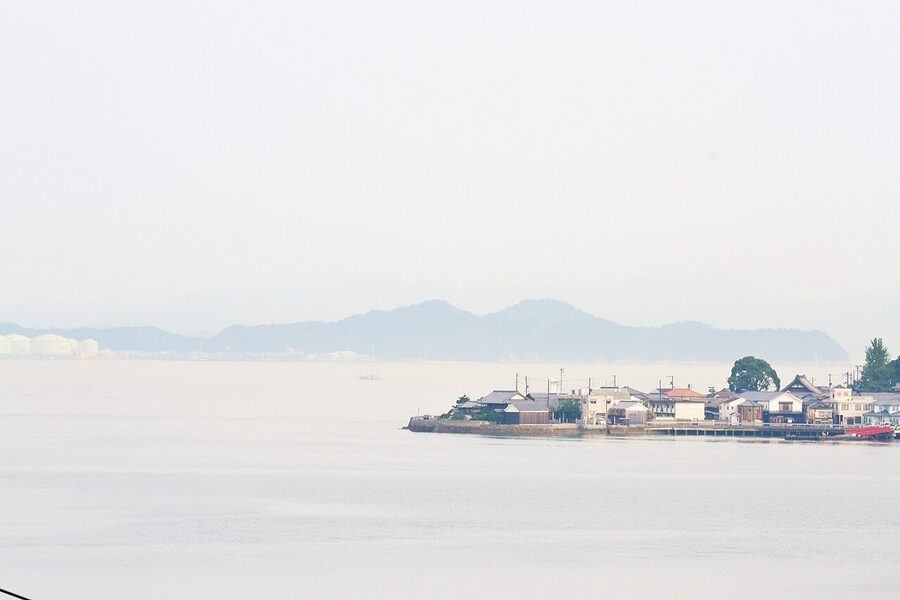

This isn’t a tour-guide point but it’s a useful one. The islands have been location for some genuinely good Japanese films, in part because the preserved townscapes give directors a working Edo-and-Showa backdrop without studio sets. A short list:
- Drive My Car (2021, Ryusuke Hamaguchi): multiple Mitarai street scenes
- Tokyo Family (2013, Yoji Yamada): Mitarai again, and Osaki-Shimojima
- The Mohican Comes Home (2016, Shuichi Okita): based in Toyoshima and Kami-Kamagari
- Letter to Momo (2011, Hiroyuki Okiura): the animated feature is set on a fictional version of these islands and it’s recognisably them
If you’re a film person, recognising the alleyways while you ride them is its own minor pleasure. If you’re not, ignore this section.
Things that will go wrong
A few things that catch out first-time riders, in roughly the order I’d worry about them:
Punctures, with no nearby shop
Unlike the Shimanami Kaido, Tobishima has no equivalent of Shimanami Toso Rescue or Shimanami Cycle Saver. There are no bike shops on the route. If you flat 15km from Akinada Bridge with your own bike, you fix it yourself. If your tube repair fails, your options are flagging down a local truck or walking. This is the single best argument for renting through Cottage Kajigahama: their on-site puncture repair service does cover the route, and a phone call brings them out.
Missing the last ferry
The 18:05 from Okamura is the genuine final boat. If you booked a hotel in Imabari and you don’t make this, you’re sleeping in a fishing village with no idea where. Build the day backwards from this number: a 30km Kawajiri-to-Okamura with two real food stops and Mitarai needs a 10:00 start at the latest, and 09:00 is safer.
Weekend closures
Counter-intuitively, the Tobishima Kaido is busier on weekends but has fewer of the small shops and cafes open than weekdays in some seasons. Fewer is not zero (the cafes I named above mostly run weekend-only or weekend-busiest hours), but the kind of village shop where you’d buy a rice ball and a drink is very often a Tuesday-Wednesday-Thursday operation.
The bilingual situation
You will see less English signage than on Shimanami. The cycling-route blue line is consistent and you can follow it without reading anything. Restaurant menus, ferry timetables (when posted), opening-hours notices, and bus signs are mostly Japanese only. Google Translate’s camera mode is your friend.
Building it into a longer trip
Tobishima rewards being part of something bigger. A few ideas:
The Shimanami / Tobishima Golden Course (2 days)
The classic combination. Day 1: ride the Shimanami Kaido from Onomichi to Imabari (~70km, allow most of a day with stops). Sleep in Imabari. Day 2: 09:30 ferry to Okamura, ride Tobishima west to Kawajiri, train back from Aki-Kawajiri to Hiroshima. Two completely different rides on consecutive days.
The Setouchi Triangle (3–4 days)
Add the Sazanami Kaido (which runs along the Hiroshima coast east of Kure) to make a Setouchi-coast triangle: Onomichi–Imabari–Okamura–Kure–Onomichi. Ferries fill the gaps. This is for cyclists who want the experience to be the whole trip rather than a side activity.
The Hamakaze Kaido extension
If you cross from Okamura back to Imabari, you can keep riding south along the Hamakaze Kaido toward Dogo Onsen in Matsuyama. This adds a hot-spring night that’s genuinely worth the detour. The Cyclonoie guesthouse staff in Imabari plan this kind of trip routinely.
The Setouchi loop alternative
For a different feel altogether, the Awaji Island loop (Awaichi) covers similar coast-and-bridge terrain but as a single 150km island circumnavigation rather than a 30km island-hopper. And the Biwaichi loop around Lake Biwa swaps the sea for Japan’s largest lake. They’re all in the same family of “circumnavigate-something” Japan rides; pick by what shoreline you want.
The long haul
If you’ve got real time, the Tokaido Tokyo-to-Kyoto run ends near enough to the Setouchi region that some long-distance cyclists finish in Kyoto and continue west by train to ride Shimanami and Tobishima as a coda. And in a different climate altogether, the Furano-Biei panorama route in Hokkaido is the open-prairie counterpart to the Seto Inland Sea: same “ride for hours barely seeing anyone” feel, completely different scenery.
What I’d actually do, if you asked me
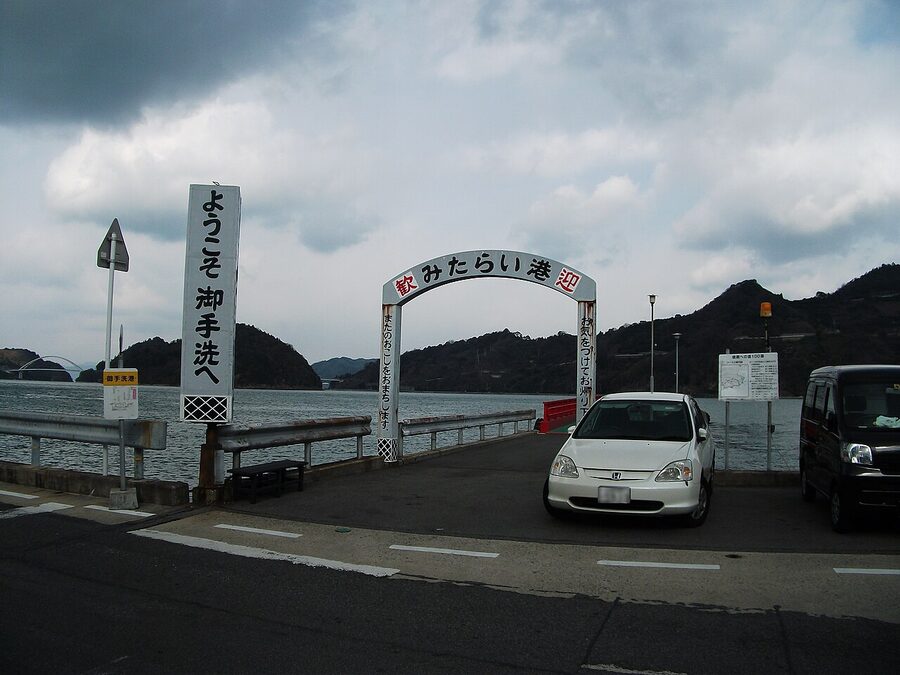

Two days in Mitarai. Train to Aki-Kawajiri Saturday morning, ride out across the Akinada Bridge with delivered bike from Cottage Kajigahama, take the south coast wherever it’s offered, lunch at Megumi-no-Oka, climb Toyoshima Bridge for the view, sleep at Guesthouse Kusushi in Mitarai. Sunday: walk Mitarai before breakfast (the village is best at 07:00 with no other tourists in it), morning coffee at Cafe Wakacho if it’s a weekend (it should be), ride east to Okamura via the orange-juice stop at Yamakiyo, lunch at Maruseki Cafe on Okamura, drop the bike at Okamura Port, take the 14:45 ferry to Imabari, train home from Imabari.
~46km total over two days, one mid-range climb, two genuinely good meals, and an overnight in a place that doesn’t really exist anywhere else in Japan. If you do this exactly once, that’s the version to do.
If you have practical questions about cycling in Japan in general (train rules with bikes, road rules, weather windows, visa stuff), the cycling Japan FAQ covers most of them in one place.
 RoutesTsukuba Kasumigaura Ring Ring: Japan’s 180km lake loop you’ve never heard ofTake the JR Joban Line out of Tokyo Station, change at Tsuchiura, and you can be on the Ring Ring…
 RoutesSazanami Kaido: cycling Hiroshima’s coastal road east of KureForty kilometres in, the road bends inland near Aki-Tsu and the noise drops off all at once. The articulated lorries…
 RoutesKibi-no-michi: 17km of cycling through Okayama’s ancient capitalThe mistake people make on Kibi-no-michi is starting at Okayama Station. The bike-rental desk is hard to walk past, the…